Exploring the group dynamics of fishing collectives and the importance of good research practice in fishing communities around Lake Victoria, Kenya
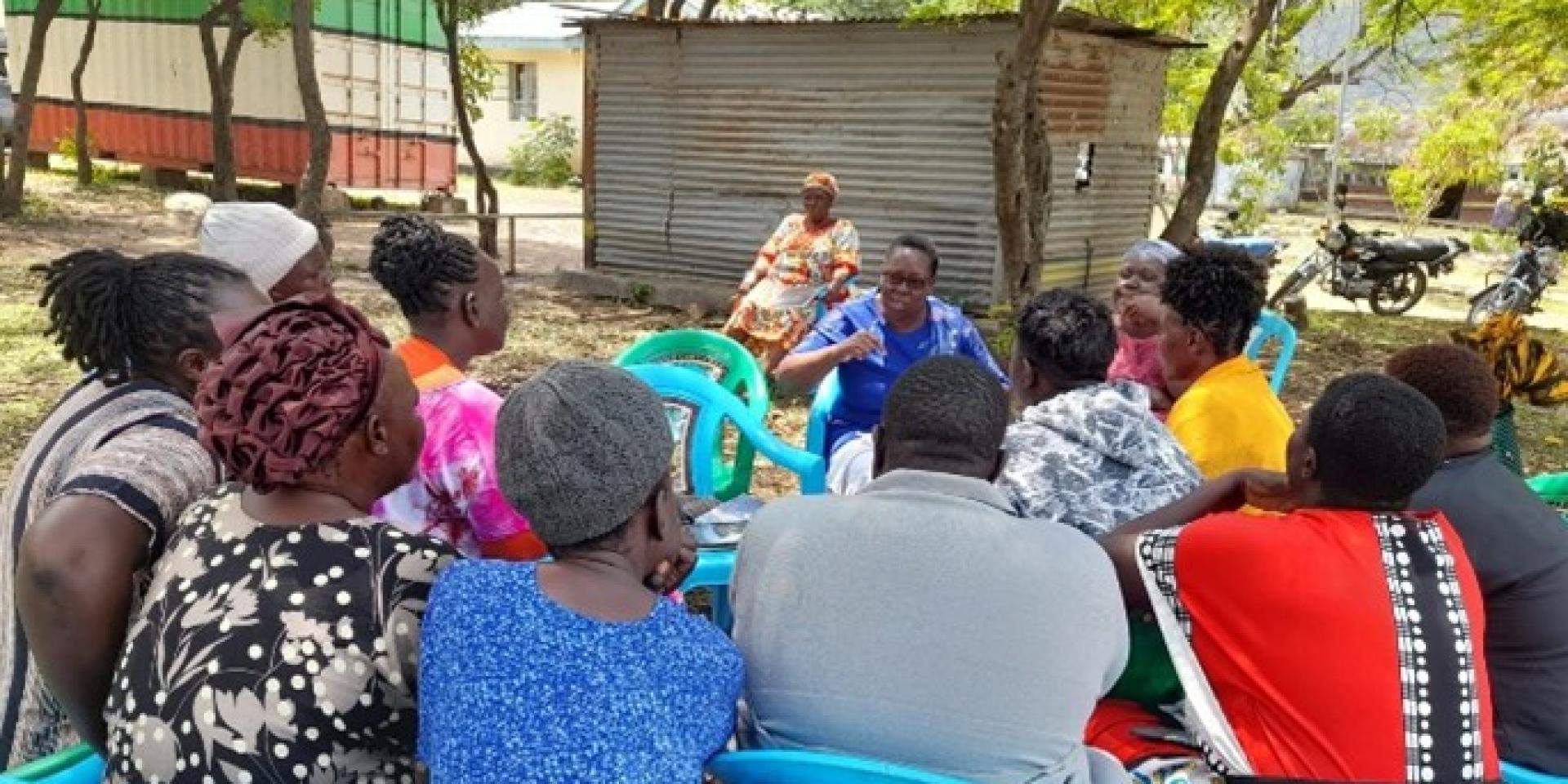 Photo: Brenda Gwada
Fishing collectives in Homa Bay and Migori counties are vital social and economic institutions. Yet challenges remain for maximizing profits, managing leadership disputes and adopting climate-smart innovations at scale. We worked with fishing groups to understand how both women and men benefit from collective action. Our study also revealed important lessons in how to conduct respectful and effective field research in fishing communities. This blog shares our insights.
Along the shores of Lake Victoria in Homa Bay and Migori counties, Kenya, fishing communities face significant post-harvest losses due to inadequate drying and preservation methods. Climate change compounds these challenges: increased rainfall and unpredictable weather often compromise traditional sun-drying and smoking methods.
However, collectives—whether formal cooperatives or informal groups—can be powerful platforms for tackling common challenges and achieving shared objectives.
Our study design for exploring group dynamics in fishing communities around Lake Victoria, Kenya compared two groups: treatment groups and control groups. Treatment groups had received climate-smart and hygiene-maintenance equipment—solar freezers, solar tent dryers, smoking kilns, and fish display boxes—under an earlier WorldFish project through the CGIAR Gender Impact Platform and Ukama Ustawi: East and Southern Africa Regional Initiative. Control groups had not.
This approach allowed us to assess whether these technologies influenced group practices and outcomes. The study followed a baseline survey on climate change impacts and pilot interventions. We targeted 13 treatment and 6 control groups, each with 23–40 members.
To reach the desired sample size of 300 respondents, at least 60 percent of each group was interviewed. Ultimately, 297 primary respondents participated, along with an equal number of spouses, resulting in a total of 594 interviews. Two of the 19 targeted groups disintegrated during the study period due to leadership and financial management challenges; these two groups were from the treatment group. This 10 percent failure rate underscores the importance of studying why groups collapse and what governance structures can prevent such outcomes.
Our findings are based on the 17 groups that remained operational. While gender and youth equity in distributing collective benefits was a central focus of our work, the scope was broader. We also examined adoption of climate-smart technologies, collective marketing strategies, post-harvest capacity needs, group sustainability and research methodologies.
Insights into group dynamics in fishing collectives
Both the control groups and treatment groups are evolving in how members work together within the groups. Many operate table-banking or “merry-go-round” savings schemes that provide microcredit, with profits shared equally among members. Most also maintain a social welfare fund, offering members critical financial support during times of need, such as bereavement or illness. Some groups access loans from microfinance institutions and re-lend to members for fish-related businesses.
Changes in fish purchasing and marketing strategies are also emerging. Traditionally, members sold fish individually rather than through the groups. Increasingly, however, collective purchasing is being explored—especially among women’s groups. By pooling resources when fish stocks are low, members can reduce costs and strengthen bargaining power. Groups also share transportation expenses, lowering individual financial burdens. Despite these efforts, groups often fall short in maximizing profits. Many lack technical training in fish handling and strategies to reduce post-harvest losses. Comprehensive training could enhance members’ confidence in adopting new technologies, reduce waste, improve product quality and, ultimately, increase incomes.
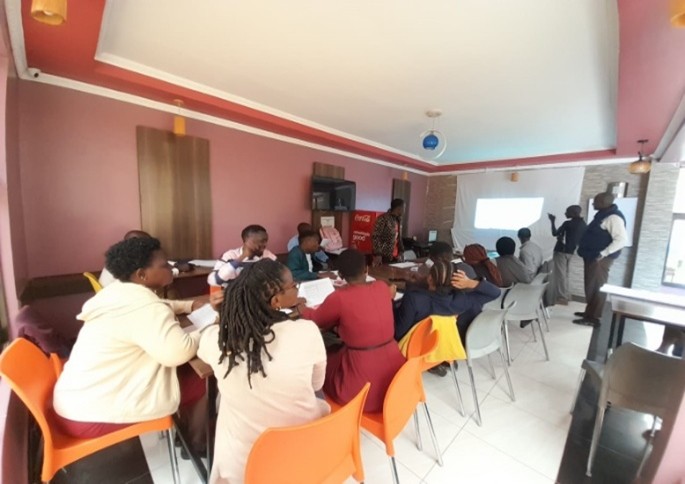
Data collection training taking place in Homa Bay county in October 2024.
Photo: Brenda Gwada
For the treatment groups, the adoption of new equipment was mixed. Solar freezers and fish display boxes were widely used, but solar tent dryers and smoking kilns were underutilized. Group members reported insufficient training on their use and maintenance, as well as limitations in equipment size and capacity. The small dryers and kilns required long hours to process modest quantities of fish, discouraging widespread uptake. Participants emphasized the importance of post-installation training and for higher-capacity equipment to increase adoption and effectiveness. These insights highlight that technologies cannot simply be delivered—they must be accompanied by skills development, follow-up support and adaptation to local contexts. Successful adoption is not only a technical issue but also a social and organizational one.
Insights into best-practice field research
The study also revealed important lessons on how to conduct respectful and effective field research in fishing communities.
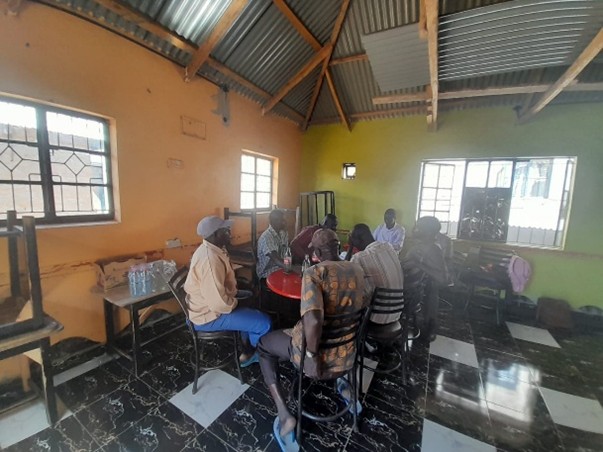
Data with focus group participants taking place in Homa Bay and Migori counties in Kenya in November 2024.
Photo: Brenda Gwada
Recruitment and training of field assistants: Field assistants were a critical bridge between researchers and participants, shaping both data quality and community trust. Their knowledge of local sociopolitical dynamics and community standing gave them credibility, while thorough training on the study’s objectives helped them manage participants’ expectations. Many community members shared frustrations about past research where findings were never fed back, leading to mistrust. By employing and empowering local assistants, this study reassured participants that their voices mattered. We will hold a multi-stakeholder workshop to share findings, validate results and incorporate participant feedback into final recommendations.
Piloting and translating tools: Piloting questionnaires proved essential for clarity and cultural sensitivity. Simple terms such as “spouse” carried different meanings, while concepts like “climate smart” or “fish products” needed local interpretation. Testing the tools in advance allowed adjustments that improved accuracy and relevance.
Coordination and communication on benefits: Engagement with local administrators and group leaders was vital for mobilization. These gatekeepers influenced participation rates and safeguarded response quality. Clear communication about both immediate and long-term benefits helped manage expectations and encouraged trust.
Data collection tools and environment: Because fishing is time-sensitive, concise questionnaires and flexible facilitation were key. Allowing conversations to flow while respecting respondents’ schedules improved participation. Recording devices, used with consent, ensured accuracy alongside notes. While privacy was ideal, many interviews occurred at landing sites or in boats, requiring creativity and sensitivity from enumerators. Together, these practices highlight that good research is not just about methods, but about relationships, trust, and respect.
Fishing collectives are vital and program methodology is central to building relationships and generating insights
Fishing collectives in Homa Bay and Migori counties are vital social and economic institutions. They offer credit, social support and new opportunities for collective action in marketing and technology adoption. Yet challenges remain for maximizing profits, managing leadership disputes and adopting climate-smart innovations at scale. As climate change continues to disrupt fisheries, strengthening group dynamics, leadership capacity and technology adoption will be critical. From our work, we also found that equally important are the lessons for researchers to conduct respectful and effective field research. Building trust through local field assistants, piloting tools carefully and respecting participants’ time are all crucial to conducting ethical, high-quality research. For communities that have often felt “researched but not informed”, closing the feedback loop is essential. For researchers, these findings remind us that methodology is not a technical detail but central to building relationships and generating insights that truly matter.
Acknowledgements
This study was carried out by WorldFish in collaboration with Murang’a University of Technology and the Stockholm Environment Institute (SEI)–Africa Center, with valuable input from Migori and Homa Bay county governments. Fifteen youth from the community were trained as field assistants, supporting data collection between October and December 2024.
Related content
Gender and data collection in fragile settings: challenges, risks and best practices