Gender and data collection in fragile settings: challenges, risks and best practices
Researchers can face challenges when surveying people in conflict-affected or fragile situations, despite the importance of data for designing better interventions. We offer collaborative suggestions to increase team and respondent safety that focus on local partnerships, flexibility, ethical review and sometimes-necessary alternatives to in-person collection.
In fragile and conflict-affected settings, collecting large-scale household survey data can be both highly valuable and uniquely complex.
Large-scale data collection that can characterize the challenges faced by both women and men in a particular context can be particularly useful in conflict-affected contexts where there is often little data available. Gender-disaggregated data, in particular, helps ensure that both women’s and men’s experiences are represented, and this is especially critical in fragile settings where women may disproportionately suffer from displacement, loss of livelihoods, or violence against women and girls.
However, we as researchers encounter unique considerations and challenges in collecting gender-disaggregated surveys in fragile environments. Security risks, cultural restrictions and logistical barriers may prevent women from fully participating in surveys in fragile and conflict-affected settings. We suggest these intentional strategies to help address these challenges.
Local partners and flexibility are key to team safety
The first responsibility of any research project in fragile contexts is staff safety. Field teams often work under volatile and shifting conditions, where threats can arise suddenly.
Partnering with trusted local institutions—such as universities or research firms—is essential, as these partners bring deep contextual knowledge, can advise on safe timing and locations for surveys, and often recruit enumerators from within the community. This local grounding not only enhances safety but also improves the credibility and acceptance of survey activities.
It is also important to allow flexibility in the survey plan and give local teams considerable autonomy in adjusting plans when necessary. Enumerators may need to adapt to local conditions by shifting locations, changing modes of transport, or pausing entirely, and all of these shifts have implications for project budgets, requiring longer periods of staff engagement, retraining, or higher travel costs.
Additionally, restricted working hours and weak internet connectivity can further complicate logistics. For example, in a recent survey implemented by our team in a conflict-affected area of Ethiopia, we had to stop data collection and then relaunch around two months later in selected areas once conditions had somewhat improved—then, due to limited connectivity, data could only be uploaded periodically by the field team from select locations where internet was operational, requiring them to travel regularly to those locations to transfer data. These adjustments were highly effective, but costly.
Safely and effectively implementing a survey in a conflict-affected context with a very restricted budget may not be possible, and researchers facing these constraints may wish to assess other options we describe below, rather than in-person data collection.
Ethical review and local endorsements also increase respondent safety
While ethical considerations are always at the heart of survey research, the stakes may be even higher in fragile and conflict-affected contexts. Surveys can inadvertently put participants at risk if protocols are not carefully designed. For example, asking participants directly about the perpetrators of any violence they have experienced or are aware of in their community is very likely high risk and should not be attempted—though asking more generally about violent incidents is usually acceptable. While not always feasible—Somalia, for example, lacks a functioning Institutional Review Board (IRB)—pursuing local ethical review where possible is highly recommended.
Equally important are endorsements from local stakeholders such as community leaders or government representatives. These not only lend credibility to the survey but also provide another channel for researchers to understand local risks and sensitivities. For example, support letters from local non-governmental organizations who might be collaborating with an evaluation or who are supportive of its aims can be valuable for field teams to obtain and carry with them, to demonstrate that their work has been endorsed by an organization with a positive local reputation.
Security risks exist for women respondents and enumerators
Women can face unique vulnerabilities in fragile environments, both as respondents and as enumerators:
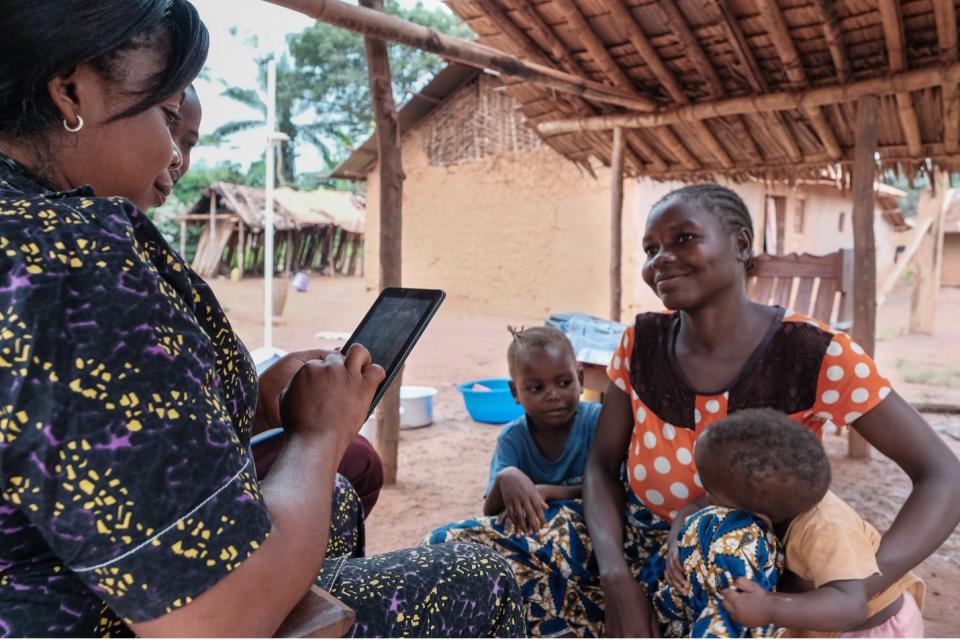
- Respondents may hesitate to engage with strangers, particularly men, due to fear, stigma or cultural norms. They may not be able to freely provide consent to a survey. These are common challenges in many settings, but can be more acute in fragile settings if feelings of insecurity are heightened.
- Enumerators may perceive and experience greater risks when traveling or working in the field, especially in areas where women’s mobility is restricted and/or where there are safety concerns due to conflict or crime.
One potential solution is to recruit all-female survey teams or have the survey team divided into subteams of women and men, as women who are participating in the survey may find engaging with women only to be more socially acceptable and comfortable. However, teams of women only might be particularly vulnerable when moving around insecure areas (or may require different modes of transport). For example, in some contexts men working as enumerators might be able to travel by motorbike or public transport, but these options might be infeasible for women due to security risks, social perceptions, or both. It can also be harder to recruit women as enumerators in sufficient numbers. These trade-offs must be openly discussed with local partners during survey planning.
Gender-specific survey modules can place women at risk
Collecting gender-disaggregated data often lengthens surveys, requiring interviews with multiple household members. In fragile contexts, longer surveys can be risky—extended interactions may draw unwanted attention or simply place undue burden on respondents. It may also be particularly challenging to survey multiple household members in one visit if men are absent due to conflict-related constraints. To navigate this, researchers could randomize respondent selection (surveying men in some households and women in others) or simplifying instruments to reduce duration without sacrificing data quality.
Relatedly, when surveys aim to capture the impact of conflict specifically, questions may also be gender-specific given that conflict generally affects women and men differently. For both men and women, modules might cover displacement, property loss, injury, or closure of essential services. For women specifically, surveys may address violence against women and girls, either directly linked to conflict or as a separate phenomenon. However, collecting such sensitive data requires strict protocols to protect the respondents from further harm and the use of safe, private spaces—and these requirements may pose a particular challenge in households hosting displaced families or in crowded settlements. Researchers should develop a referral protocol for women who are at risk of violence or who might require follow-up services.
Alternatives to in-person data collection
In some contexts, collecting data in person is simply not feasible. Phone and online surveys offer an alternative, though they come with trade-offs. Phone surveys are necessarily shorter (often capped at around 20 minutes to avoid respondent fatigue) and they cannot be used to measure sensitive topics like violence. However, they can still capture valuable data on livelihoods, food security and household assets.
Targeting women over the phone may also pose challenges, particularly in households where men control the handset and women are unlikely to own their own phones. Moreover, it is difficult to ensure that women are in a private space when responding to a phone survey, which can introduce risks, particularly when sensitive questions are asked. Engaging women to work as enumerators may improve response rates, but careful consideration of social perceptions remains essential.
Conclusion
The intersection of gender and fragile settings presents challenging trade-offs. Collecting data from women is essential for inclusive, effective interventions, yet it is often the most challenging aspect of survey design. The best way forward is a collaborative one: involving local partners, government stakeholders, ethical review boards, and community representatives in planning and decision-making about collecting data from both women and men.
Related content