Mindset shifts and meaningful actions: transforming the future for women farmers
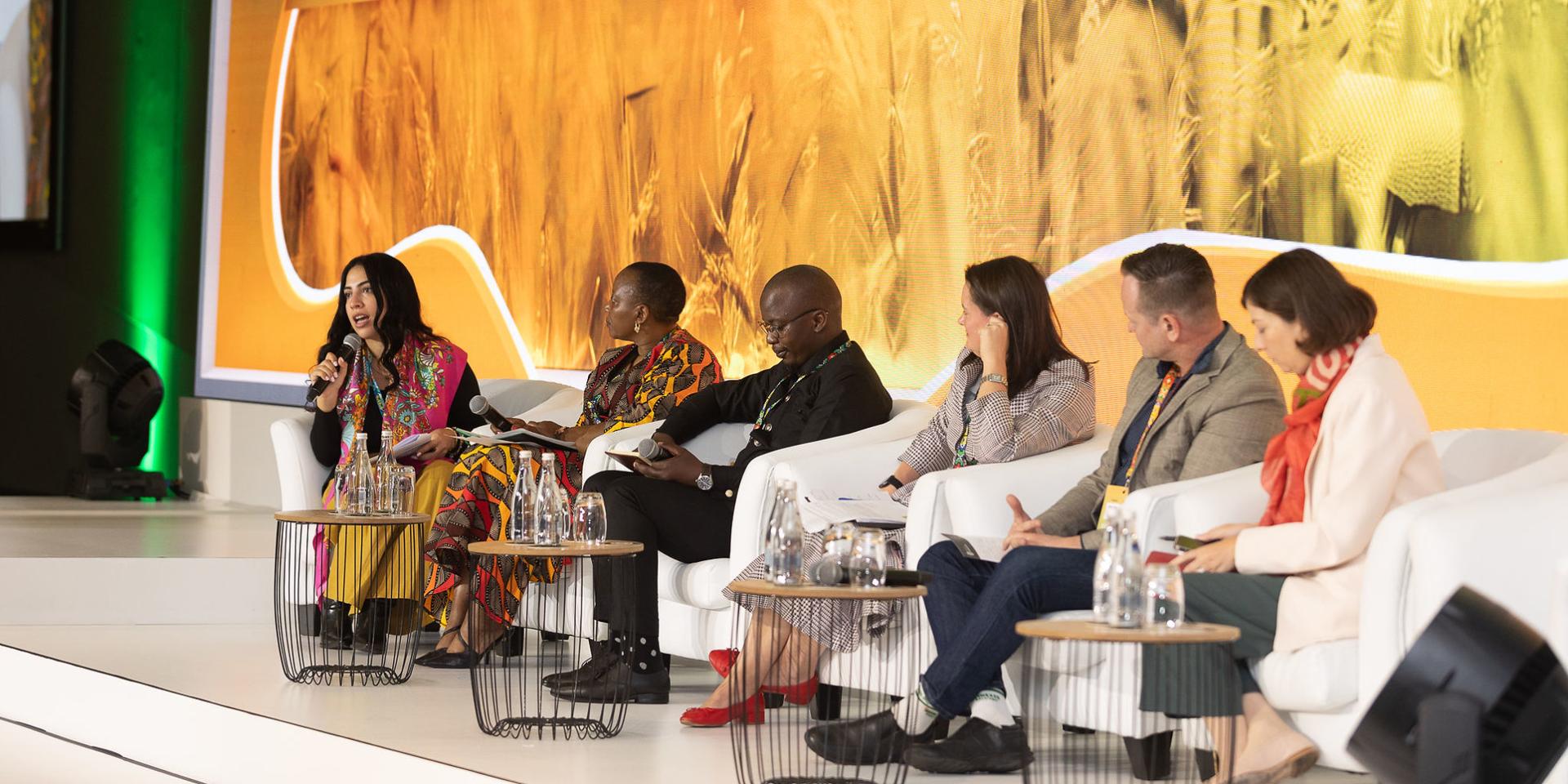
The second plenary looked hard at how policy, investment and innovation could meaningfully be used to create just food systems for women, on the doorstep of next year’s focus on women farmers.
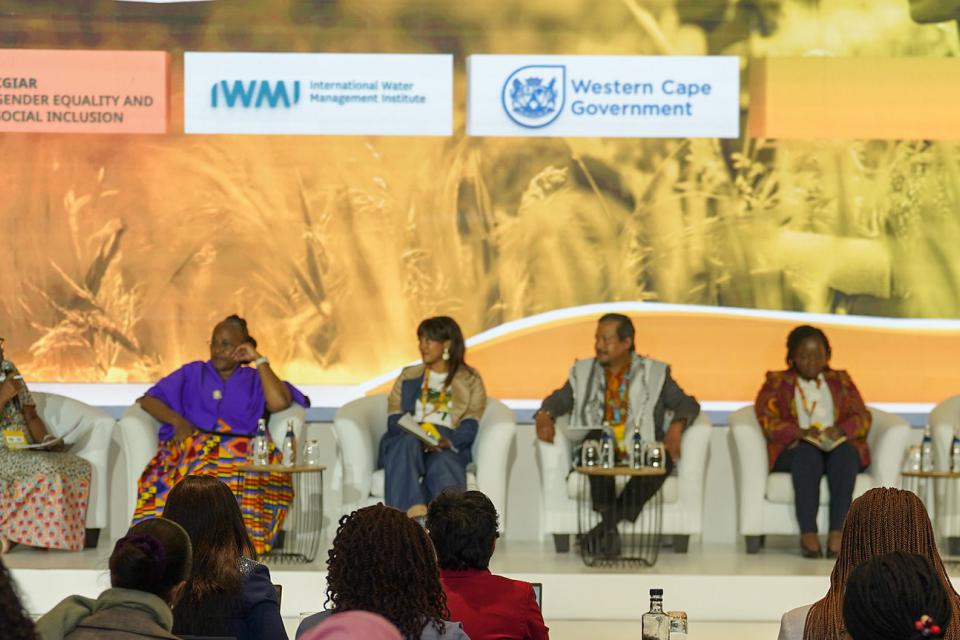
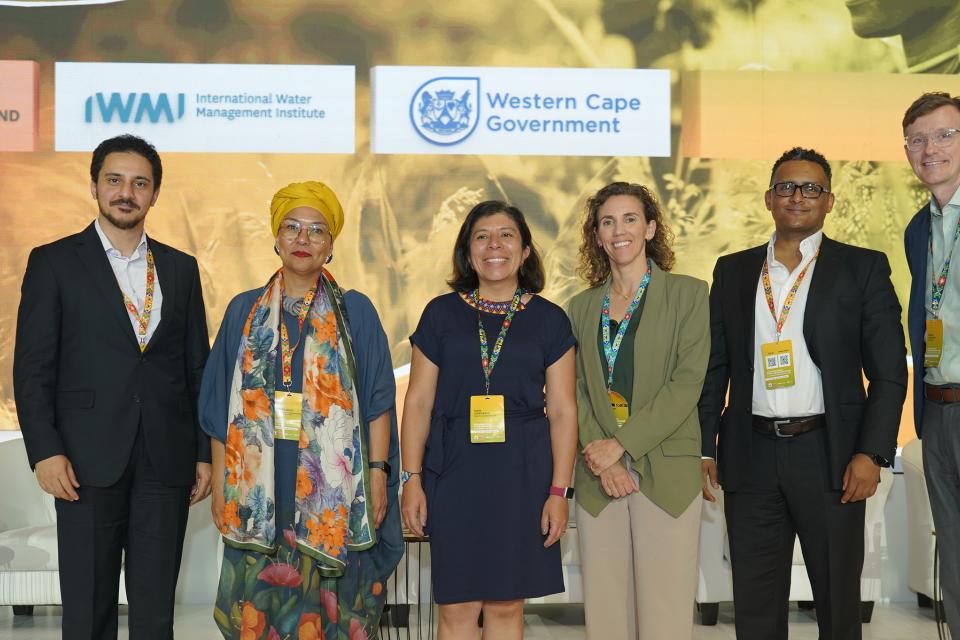
At the second plenary of the 2025 Gender Conference, Setting the stage for 2026 through policy, investment, and innovation, speakers explored what it will take to unlock the full potential of women farmers in transforming food, land and water systems.
With the International Year of the Woman Farmer on the horizon for 2026, the discussion centred on changing mindsets, reforming systems, and translating data into action. These strategies can help women to access resources more equitably, decision-making power, and opportunities to lead.
The session brought together leaders from government, civil society, and the private sector. Speakers reinforced the call for a collective shift in thinking, from viewing women as beneficiaries to recognizing them as central agents of change in transforming global food systems.
Launching the International Year of the Woman Farmer
Opening the session, Lauren M. Phillips (Deputy Director, Rural Transformation and Gender Equality Division, Food and Agriculture Organization) announced the upcoming launch of the International Year of the Woman Farmer (IYWF) for 2026—alongside the International Year of Rangelands and Pastoralists.
“Women are central to agriculture and food systems,” Phillips said. “They perform a disproportionate amount of care work that sustains communities, yet remain excluded from land, markets, finance and decision-making.”
At a time when global funding for women and agriculture is declining, the IYWF aims to mobilize renewed commitment from governments, donors, and partners. So far, 127 governments have endorsed the initiative.
Phillips emphasized that the inequalities faced by women farmers are unjust and economically costly. “Each day of extreme heat reduces women’s crop yields by 3% more than men’s because women lack access to the same inputs, finance and technology.” Closing this gap, she explained, could lift 45 million people out of food insecurity.
“Investing in women is smart economics,” she said. “Empowered women transform agri-food systems.”
Unlocking women farmer’s potential through transformative changes
Panellists explored what they considered the most transformative change needed to unlock the potential of women farmers.
For Mmatlou Mabitsela (Bomunu Farms) empowerment begins with a mindset: “We are not small farmers—we are farming big on small pieces of land.” Expanding on this, she stated that finance to capable women farmers is the single intervention that could have the biggest impact: “We have the power and capacity to manage finances responsibly; we just need funders to see us as businesspeople—not just farmers.”
Patricia van de Velde (Gender Lead, Agriculture Practice, World Bank Group) agreed that women’s empowerment is crucial, including “recognizing women’s decision-making power.”
Mfundo Nomvungu (Commissioner, South Africa’s Commission for Gender Equality) emphasized that transformation cannot be achieved through fragmented efforts. “Policies have been drafted and implemented to some extent, but they haven’t changed the picture on the ground,” he said. “We need intentional, radical implementation and proper coordination to make transformation real.”
From the private sector, Phil Bowes (Inclusive Growth Strategies Manager, South Africa Wine) added that meaningful transformation means listening to women business owners’ needs about their opportunities and concerns about risks: “Nothing is as it seems in a complex system.”
Strategies that actually work to increase women’s decision-making power
How can women farmers gain true decision-making power? The panelists shared insights from their experiences.
Nomvungu outlined four strategies that have shown results in South Africa:
- Equitable resource access—reforms to ensure land, water and finance programs are “extremely [helpfully] biased” toward disadvantaged women.
- Awareness and education—empowering women with knowledge of their rights and working conditions.
- Collective action—strengthening farmer organizations to amplify women’s voices.
- Advocacy and accountability—ensuring women influence the policies that affect them.
Mabitsela also underscored the importance of local consultation and language accessibility. “We need documents and training in local languages so farmers can take ownership of information and shape interventions that actually work,” she said.
The role of evidence in impetus and accountability
The discussion then turned to evidence and accountability—and how research can become a lever for real change.
“The [South African] constitution already holds us accountable,” Nomvungu said. “But corruption remains the biggest barrier to meaningful transformation. Duty bearers—including government and industry—must implement the prescripts they are charged with.”
Van de Velde cautioned that “good research is not enough”—that it needs to be translated into options acceptable to governments then embedded in policy. “Accountability and change only happen when they’re part of a contract,” he stated.
Phillips agreed: “We need to build a business case that compels governments and investors to act. [Its] data must be convincing and accessible.” She emphasized the need to invest in primary data collection and effective communication, so that evidence reaches decision-makers in usable formats.
Public declarations can encourage results
Phillips explained FAO’s commitment-to-action ‘Commit To Grow Equality’ initiative that invites organizations to publicly declare their contributions to closing gender gaps, such as:
- African Women in Agricultural Research and Development (AWARD) committing to enhance women’s leadership
- Olam Food Ingredients (ofi) pledging to train more women across agricultural value chains
- the Governor of South Sudan committing to expand women’s land rights
- UN Women focusing on enhancing women’s resilience
- the UK’s Foreign, Commonwealth & Development Office pledging a gender audit of its portfolio
“This collective action builds accountability. It helps us track progress and hold ourselves to the commitments we’ve made,” she said.
Transformation will require us to change how we see women
As the world prepares to mark the IYWF in 2026, this second plenary underscored that transformation will not be about ‘giving’ women empowerment, but creating the conditions for women to empower themselves.
Collectively, we need to change how systems work, how investments are made, and how accountability is enforced. It means seeing women as leaders, innovators, and decision-makers in the global drive for sustainable food systems, instead of vulnerable.
Van de Velde had an excellent point about changing institutional frameworks and policies beyond the reach of short election cycles: “If we don’t change the rules of the game, we’ll be having the same conversations 30 years from now.”