Top 10 reads on gender and water
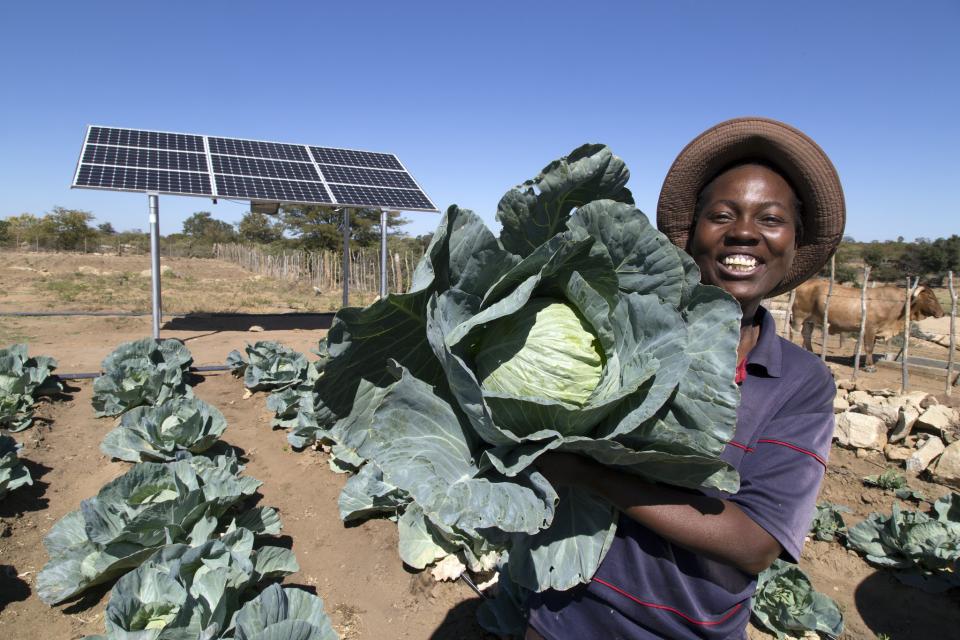
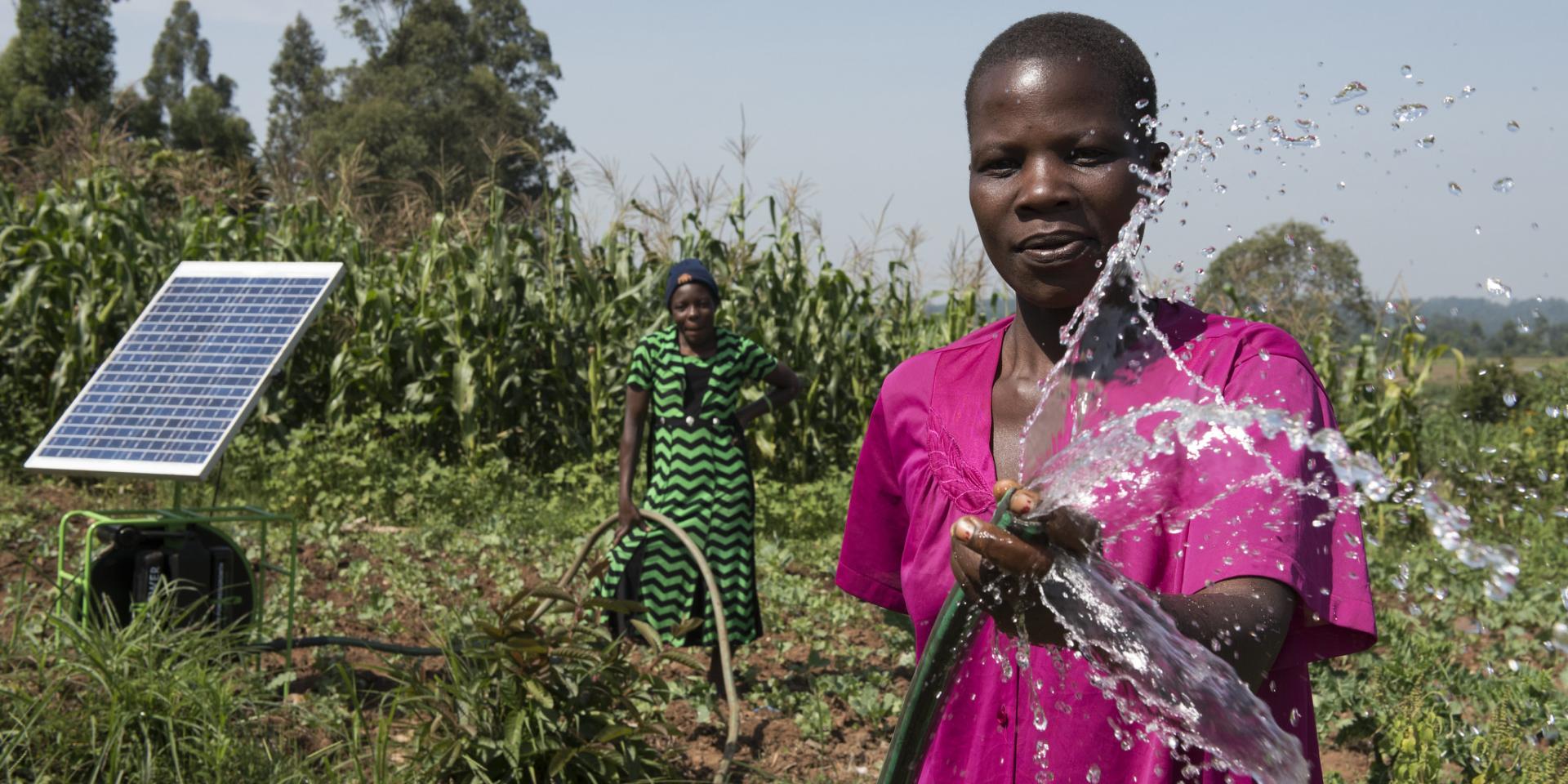 Photo: Jeffery M Walcott / IWMI
A series of recommended reading lists provide starting points for researchers, students, practitioners and others looking to dive deeper into research on gender and a wide variety of topics.
In this list, we take a closer look at recommended reading on gender and water.
A growing body of literature investigates the gendered dynamics of water and irrigation. While in no way exhaustive, the 10 readings presented here each provide different conceptual, methodological or empirical insights that have contributed to a broader, deeper and more nuanced understanding of inclusion, equity and empowerment in the context of water.
Water as more than an economic commodity
#1
Often, gender-related literature tends to pit women against men, social scientists against technical practitioners, and qualitative social science against other technical knowledge and science. This has resulted in a “them versus us” context and, unsurprisingly, with significant backlash and resistance to dialogue for gender transformative change. “The politics of gender in water and the gender of water politics”, a chapter within The Politics of Water: a survey points out how personal biases or unwillingness to change is shaped and legitimized by deep-rooted “epistemic traditions” in water science, policy and practice. By exposing this deep-rootedness of othering in science, this chapter performs an important function—it helps shift the tensions between individual stakeholders to the politics of what makes for science, knowledge and ways of “doing water”. By doing this, the article also points out that restoring transformative changes will require systemic shifts in the ways of knowing and “doing science”.
#2
The Routledge Handbook of Gender and Water Governance is a newly published, rich tapestry of articles by feminist researchers who have committed their careers (and lives) to looking critically at water. This collation of evidence, knowledge and insights scratch well beyond the surface to understand how power and positionality shape experiences of water injustice, livelihood precarity, sanitation challenges and why so much is wrong with the management and governance of water. Unlike most feminist research, which tends to stop at critical analysis, this book outlines alternative futures and differing perspectives. For example, the last chapter in this book is about why water needs to be understood and acted on differently. The authors point out that “human bodies (as other bodies) are all comprised mostly of water. This watery constitution enables bodies to move, grow, change”, heal and reproduce. These bodies of water, like other watery landscapes have significant flexibility—adapting in remarkable ways to external and internal changes. However, there are limits to this flexibility and adaptation. When pushed beyond the tipping point, these bodies can transform completely or get “annihilated entirely”. The message is that water bodies are “never simply ours, to be controlled” through infrastructure or for purposes that relate narrowly to human interests in economic gains. We need to be cognizant of the flows of water—that flows through us, other biotic and abiotic bodies—all of which matter for life, for health, and for human and ecological wellbeing.
#3
Water is often at the heart of research relating to climate impacts. And it is no surprise that stories of poor women, impacted by too much or too little water, make for a popular narrative. This journal article, Climate refugees or labour migrants? Climate reductive translations of women’s migration from coastal Bangladesh makes a challenging observation. Focusing on Bangladesh, the author points out that migration has historically been a coping strategy in the coastal areas of Bangladesh, 80 percent of which is essentially a floodplain. She also adds that many of the challenges faced in the southern coastal regions of Bangladesh are not an outcome use of climate impacts, but of problematic policy strategies, infrastructure and interventions. Citing the history and political economy of change in these regions, the author argues that poor women migrating is neither entirely new nor negative and that, perhaps, we need to focus on supporting essential and desired migration with more positive outcomes for poor women and men.
#4
From commodity to common good: A feminist agenda to tackle the world’s water crisis was published just after the 2023 UN Water Conference, and aligns with the opening remarks by the UN Secretary General that “water is in deep trouble” because of “overconsumption and unsustainable use, and evaporation through global heating”. This report published by UN Women argues that the water global water crisis validates what feminist water researchers have long argued for—that water is not a commodity or an extractive resource, but a living entity, a common good with rights that go far beyond human need and use. Going against the practice of seeing water as a commodity requires learning from traditional, local and indigenous knowledge, shaped by principles of environmental justice, and ecosystems’ innate rights. The value of this approach is well understood, and several countries, including India, New Zealand, Ecuador and Bolivia have endorsed the “unalienable rights of water”. Women have often been at the forefront for advocating for these rights. This report also summarizes key water challenges and spells out the gender dimensions of contentious challenges, and the centrality of these to achieving the to the UN’s Sustainable Development Goals.
Water works
#5
Feminist researchers often argue that numbers do not tell the whole story; however, numbers showing the underrepresentation of women in water utilities tell a strong story: despite decades of interventions on gender and water, aqua institutions are far from being equal. The World Bank report, Women in Water Utilities: Breaking Barriers, shows that water utilities report disproportionately higher turn-overs of women—and those who stay face barriers throughout their careers, including poor professional growth.
In the report, quantitative data is complemented by qualitative data that explains why women are so poorly represented in the water workforce. Firstly, unequal social norms and social biases shape the reality of a masculine water sector, a sector that very few women aspire to join. Secondly, human resources policies in these water institutions are often not designed to address the gender gap and address unwelcoming work environments. There is no mechanism to address the systemic biases that disallow women from staying and moving forward in these institutions.
This report is a powerful example that shows why women’s struggles with water are closely shaped by the lack of gender diversity in the water sector. Despite all the attention to gender and water, the water sector remains overwhelmingly masculine. Beyond these analyses, this report is also relevant as it outlines approaches and tools for working towards more equal, enabling and inclusive institutions.
#6
This editorial, Changing the discourse: from the rhetoric on women and water to a feminist water agenda, was also written after the 2023 UN Water Conference, and is a reminder of the rhetoric and reality when it comes to gender and water equality.
International declarations since the 1970s have emphasized that water matters significantly to women. However, half a century on, women and girls still spend around 200 million hours every day collecting water for domestic use, and there is very little information on how growing numbers of women farmers experience water [in]security. The situation looks set not just to continue, but to worsen, given declarations of “an unprecedented water crisis”. Applying a feminist lens, this article argues that very little has changed for women in relation to water, because strategic, systemic issues that shape inequality—including the masculinity of water science, policy, practice and institutions— remains unchanged. Using case study examples from Nepal, Indonesia, and Kenya, this article shows the rhetorical ways in which gender policies are applied in water policies and projects, and how these need to be replaced with intentional transformative principles and practices. For example, the complex politics at local levels that shape hydrosocial systems require more intentional, decolonized principles of doing research, including paying attention to the power and politics around water (in)security within knowledge, science and research partnerships and processes. The underlying message of this paper is clear: if we want to shift the dial towards transformative change, we need chart a feminist water agenda that recognizes the deep-rootedness of water injustices, which play out at scale from local to global levels.
Ownership and borders: a man’s world?
#7
In South Africa, and across Africa more generally, land inequality is closely entangled with water injustices—both these challenges are mediated not just by race, but also by gender. Land, water, and gender questions in South Africa: A transformative social policy perspective argues that this complexity has not been adequately understood nor addressed in current policies and strategies on the water–land–food nexus—and the outcomes of this oversight have been costly. For example, the Water Allocation Reform Strategy of transferring 30 percent and 40 percent of agricultural water uses to women by 2014 and 2019, respectively, mirrors the gendered and racial distribution of agricultural water uses in South Africa. Historically, disadvantaged groups control a mere 5.8 percent of existing individual lawful agricultural water uses. Land redistributed to Black farmers is essentially dry land, and without water this land has little economic and productive value for the beneficiaries. The lack of attention to class and gender (in addition to race) in South African land and water reforms means that women, especially poor women, have remained invisible and excluded from these distribution programs.
#8
Water flows are not aligned to administrative boundaries, which results in complex transboundary conflicts and contestations. Managing these decisions requires sensitive, highly strategic inter-governmental negotiations and cooperation, which has resulted in a whole new body of work referred to as water diplomacy. When it works, water diplomacy can prevent, mitigate and resolve conflicts and disputes over transboundary waters, and when it does not, the impacts are costly—economically, politically and socially
It is no surprise that few women are represented in transboundary water diplomacy. Looking at water diplomacy initiatives in Africa and the Middle East, Latin America and Europe, Water diplomacy: A man’s world? Insights from the Nile, Rhine and Chu-Talas basins explains that the issue is not just one of numbers, but of deep-rooted gender power dynamics. It was not until early it was not until early to mid-20th century that positions of political diplomacy were opened to women. In these spaces, historically marked (pun intended) by powerful men, a masculine logic of appropriateness drives expertise and achievements. What would water diplomacy look like if it was informed by a feminist approach? The authors imagine a space of collective, collaborative engagement that is not defined by current “bilateral, secret, elitist (and male)” spaces, but open to non-state actors, including grassroots leaders, who bring everyday experiences of water inequality and insecurity to bear on decisions around the flows and sharing of water.
#9
Latin America has historically provided inspiring stories of social justice, social movements, women’s agency and empowerment. Perched on a parched hill: Popular women, popular feminism, and the struggle for water in Medellín draws from one such collective movement in Medellín, Colombia, to show how economically and ethnically marginalized women from a low-income settlement in the city came together. Identifying themselves as “Mujeres Populares” (popular women), they fought to bring not only water, but many other basic needs and security to their homes and community. Interestingly, the paper shows that these “popular brave women” still struggle with gendered social norms of masculinity and patriarchy inside their homes. However, there is a difference in how these women deal with the patriarchy of care work—they perform care work, but do not hesitate to critique it. This article is very interesting because it shows these women were able to secure water and other services by ways that challenged systemic biases that result in inequal access to basic services in urban spaces.
#10
This poem details the water experiences of a Dalit woman and it is essentially a viewpoint on water injustices from below. This poem speaks to the fact that caste, class, age and gender combine in unique ways to determine water injustices. The most powerful message in this poem is that the popular narrative of a global water crisis does not capture these deeply embodied, nuanced experiences of water injustices. A bottle of Bisleri water—so easily available to those who can afford it—makes a mockery of real water challenges: the inability to find water to bathe in hot, humid climates, to the indignity of waiting all day to be “given” water from a well that cannot be touched due to social norms of a caste-based pollution, and to the perpetual thirst for a fresh cool glass of water.
Water — a poem by Challapalli Swaroopa Rani, translated by Uma BhrugubandaI
Just as the water knows
The ground’s incline,
It knows the generations-old strife
Between the village and the wada.
Like the dampness on the well’s edge that never dies
The water knows everything.
It knows the difference of race
Between the Samaria woman and Jesus the Jew.
It also knows the sub-caste difference
Between leather and spool
It knows the agony of the Panchama,
Who, not having the right to draw a pot of water,
Waits all day near well
With his empty pot
Until a shudra arrives
It knows the humiliation
Of the wada girl
When he who poured the water from a distance,
falls all over and touches her
It knows the righteous rage
Of Karamchedu Suvarthamma
Who opposed the kamma landlords
With her water pot
When they asked her not to pollute the pond water.
The water is witness
To centuries of social injustice
When I see water
I remember
How my wada which would thirst all day
For a glass of water
For us, water is not simply H2O,
For us, water is a mighty movement.
It is the Mahad struggle at the Chadar tank.
A single drop of water embodies
Tears shed over several generations.
In the many battle we fought
For a single drop of water,
Our blood flowed like streams.
But we never managed to win
Even a small puddle of water
When I see water,
I remember
How we welcomed our weekly bath
As if it was a wondrous festival!
While the entire village bathed luxuriously-
Twice a day
When I see water,
I remember
My childhood,
When we walked miles
To reach the big canal
And carried back heavy pots,
I remember,
Its thatched roofs aflame,
The Malapalle burning ashes
For want of a pot of water
Water is not a simple thing!
It can give life
But it can also devour lives.
The water that refused to quench parched throats
Became the killer tsunami wave,
That swallowed whole
Village after village
The poor are but playthings
In its vicious hands.
Often, it turns village into dry deserts
And sometimes it drowns them in flood
Between the village and the wada
Between one state and another,
This water can ignite many struggles and strife.
It can make blood run in streams.
But it can also sit innocently
In a Bisleri bottle
This water from our village well
That forces us to do many a circus feat,
Now slowly, surreptitiously,
Dances its way into the Pepsi man’s bottle.
With its new name ‘mineral water’
It takes to skies,
It raises a storm
Now
Water is no mean matter.
It’s a multinational market commodity.
As they say
Water is omniscient.
It contains the world
Related content