Top 10 reads on gender and livestock
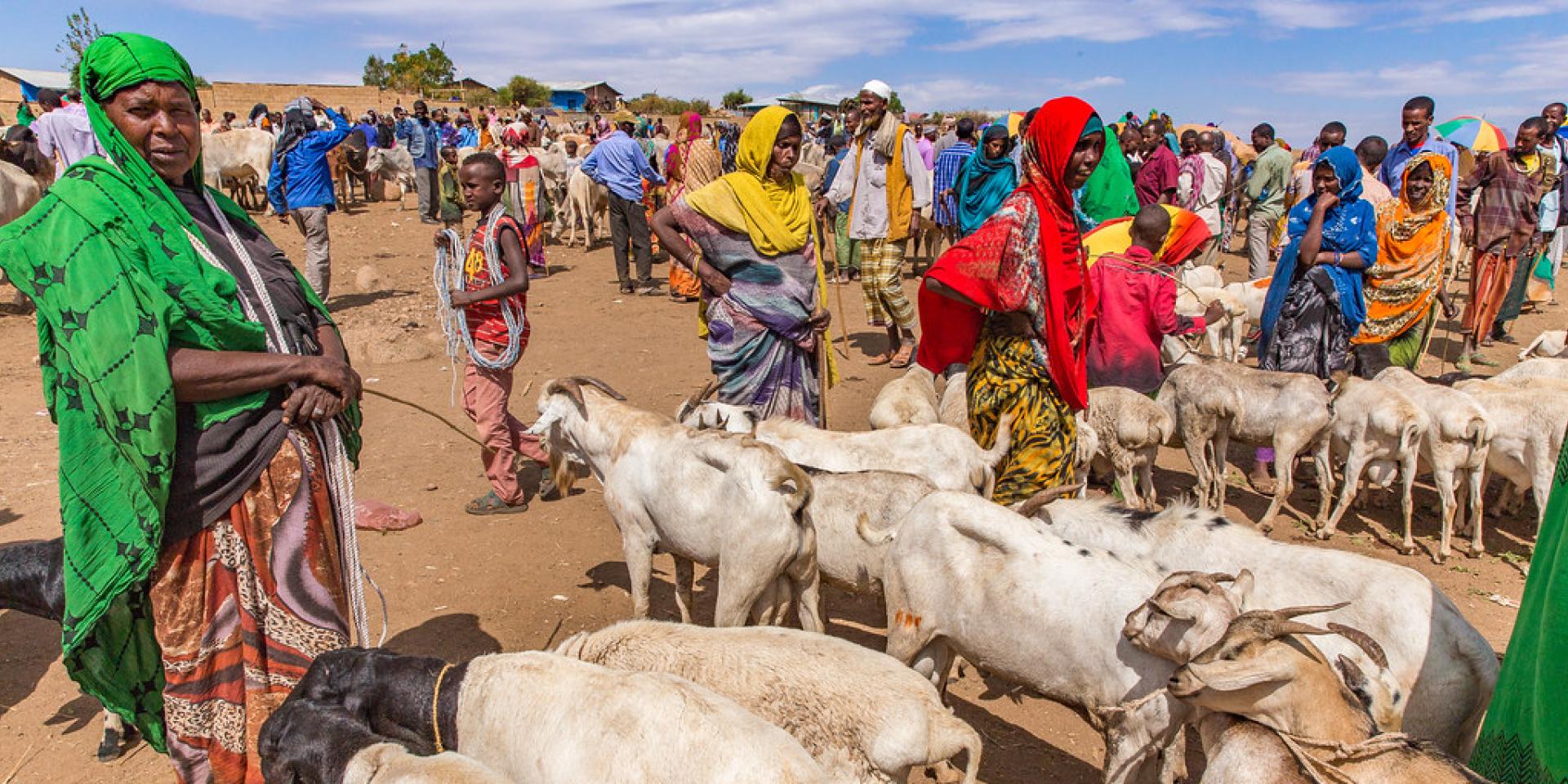 Photo: E.W. Cordon
A series of recommended reading lists provide starting points for researchers, students, practitioners and others looking to dive deeper into research on gender and a wide variety of topics.
In this list, we take a closer look at recommended reading on gender and livestock.
Over the past decades, a burgeoning body of literature has begun investigating the gendered dynamics of the livestock sector. While in no way exhaustive, the 10 readings presented here each provide different conceptual, methodological or empirical insights that have contributed to a broader, deeper and more nuanced understanding of inclusion, equity and empowerment in the context of the livestock sector.
# 1
If you can curl up with a cup of tea and a hard copy of Indian economist Naila Kabeer’s book Reversed Realities, she will explain the history of entrenched gender hierarchies in development policy with vivid examples. If you are not blessed with a neighborhood feminist bookshop, this podcast discusses the legacy of the book 30 years after its first publication.
#2
For statistics and a holistic discussion of gender and livestock, especially in developing countries, the FAO’s 2023 report The status of women in agrifood systems is the go-to document. We are reminded that women’s access to resources, such as land and capital, are lower than for their male counterparts and that well-intentioned interventions to increase livestock intensification often cause extra workload for women. It is 140 pages long, but you can text search for “livestock” to get to the juicy parts.
#3
“Breaking Even” under Intensification? Gendered Trade-Offs for Women Milk Marketers in Kenya gives an example of the recurring concept that intensification of production in livestock sector is not “the rising tide that lifts all boats”, and women particularly may face trade-offs when transitioning to selling goods such as milk in formal markets.
#4
Animal health emergencies: A gender-based analysis for planning and policy is a favorite of mine because it features examples from the global North and examples of masculinities and the social expectations of men. Development resources have historically targeted women, but gender research focuses on the social hierarchies and relationships between people, so it can be useful to learn about how men in agriculture navigate gendered expectations. I would like to see more academic gender research in agriculture from western, developed countries.
#5
For researchers or development practitioners who do not have a gender background, but who want guidance for collaborating with gender colleagues or brainstorming gender considerations in their work, I recommend the Gender-responsive animal health research: A framework and checklists for ILRI researchers. The International Livestock Research Institute (ILRI) also has gender frameworks for other topics including One Health and antimicrobial resistance.
#6
This scoping review looked at 102 studies that implemented livestock interventions and reported impacts on indicators of women’s empowerment. Gender-accommodative approaches were associated with more advances in women’s empowerment than gender- blind approaches, but there was no significant difference in the reported negative effects, challenging the prevailing assumption that gender-accommodative approaches ‘do no harm’.
#7
The Women Rear project is one of the most progressive and successful projects the ILRI Gender Team has worked on recently. Part of a set of four projects supported by the Livestock Vaccine Innovation Fund to address women’s barriers to livestock vaccination, it improved women’s access to PPR vaccines for small ruminants and Newcastle disease vaccines for chickens by bundling technical interventions (e.g., getting vaccines to rural areas at a lower cost using drones) and socio-institutional interventions (e.g., recruiting women animal health workers and having community conversations to challenge restrictive gender norms that prevented women from owning livestock, even chickens). The Women’s Empowerment in Livestock Index (WELI) was used to quantitatively and qualitatively learn more about the relationship between different aspects of women’s empowerment and livestock vaccination.
#8
Gender based-disadvantage does not end with livestock keepers and farmers, it exists for other actors in the livestock value chain, including animal health workers and veterinarians. Still a minority: integration of women in the veterinary sector is a World Organisation for Animal Health (WOAH) report on experiences of young women studying and working as veterinarians in Togo and Senegal. The full reports are downloadable at the bottom of the article and available in English and French.
#9
This discussion between two equestrian professionals on the Emotional Horsemanship podcast on this episode called Feels like the patriarchy hurts everyone delights me because it tackles social hierarchies using a fuller and richer understanding of gender than we use in our day-to-day work as gender researchers in agricultural research centers based in the global South. They consider how sexual orientation and identifying as non-binary influences their relationships with people and in turn their work with horses.
#10
To end on a light note, check out the Binti Shujaaz comic book. Binti Shujaaz means “heroine” in Swahili, a fitting name for the young women who are persevering in chicken keeping despite restrictive gender norms in their communities that can limit young women in agri-business. This comic book was distributed in Tanzania in 2024 to support community conversations about norms and is available in English and Swahili.
Related content