Online storytelling training showcases crucial gender-responsive research
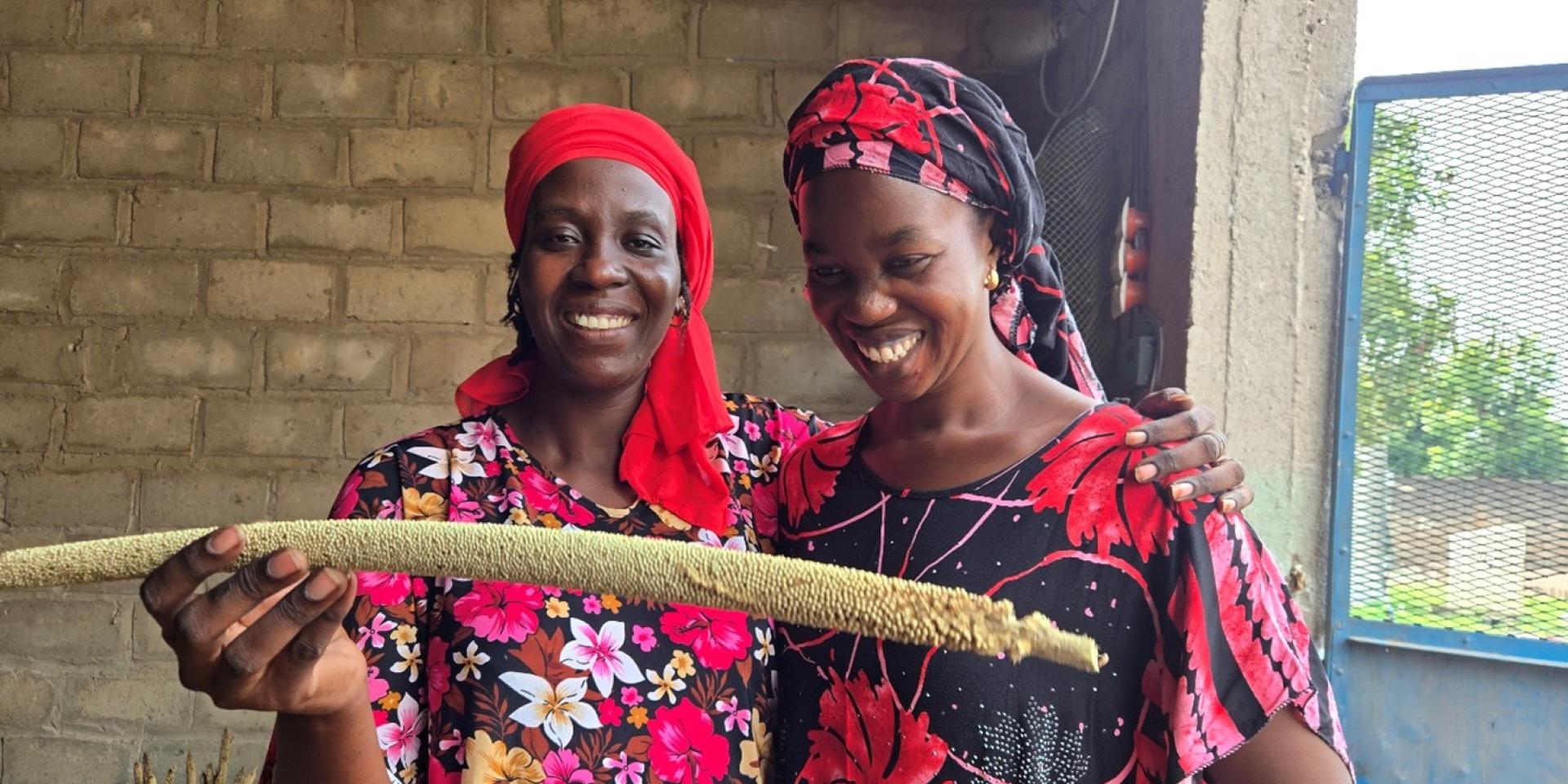 Photo: Amanda Grossi / Alliance of Bioversity International/CIAT
For the past three years, the CGIAR GENDER Impact Platform has trained 45 communicators and researchers on how to identify, tell and pitch stories about gender-responsive solutions in agriculture. This training has generated more than 50 stories for news outlets in Africa, Asia and internationally.
“A colleague who supported my fieldwork [to research my story for the training] jokingly asked, ‘Gloriana, is this a training or a second degree? When you’re done, you’ll be a gender expert in your stories!’ Looking back, I think he had a point! Gender-related perspectives are now at the forefront of my storytelling, and it’s amazing to see how this approach makes narratives more balanced and impactful.”
Gloriana Ndibalema was writing (and subsequently published) her training course story on Cassava seed business changes women farmers’ lives in Tanzania. She is a science communicator with the International Institute of Tropical Agriculture (IITA) who took part in GENDER’s storytelling training at the end of 2024.
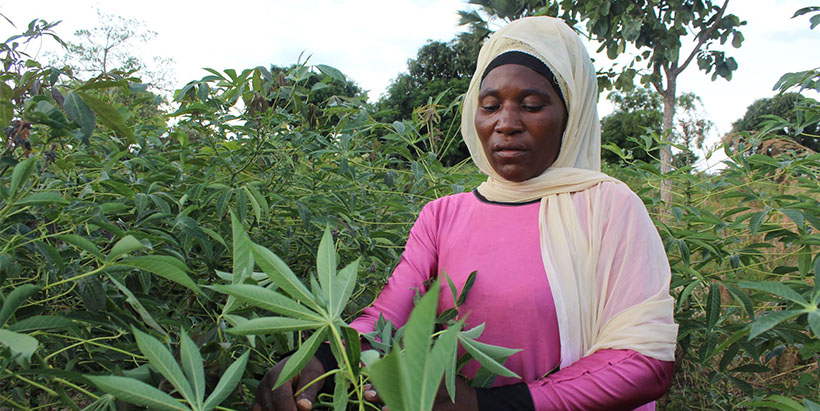
Gloriana photographed Saada Mkuyu, a cassava-seed entrepreneur inspecting her farm for pests that cause cassava disease. Photo: Gloriana Ndibalema/IITA
The GENDER training course was developed in response to the limited media stories that highlight research that has intentionally-developed agricultural solutions that work for women. Often, media stories use outdated or lazy myths and stereotypes, such as those that portray women as one-dimensional victims or environmental saviors.
The participants of the three GENDER storytelling courses are making great strides in helping to turn this around.
Bhuvana Narayana Rao, Senior Social Science Researcher and Consultant with the International Maize Improvement Center (CIMMYT), who attended the latest training said recently:
“Reflecting further on the training programme, I am now applying the skills I learned to my current role, where I am developing a case study handbook based on preliminary interviews conducted for one of my projects. This was one of the best training experiences I have ever had. It motivated me to write and to seek out platforms where real stories can find a space.”
Bhuvana published her story from the training in Down to Earth: In Gujarat’s Anand, dung economy is catalysing a positive change for women in urban fringes.
And second-course participant Tanmoy Bhaduri (a Communications and Knowledge Management Consultant at the International Water Management Institute) recently won an award for his story about how solar pumps are transforming the lives of female farmers in Bihar, India—cultivating their independence and opportunity while watering their crops using solar technology for affordable agricultural irrigation.
On winning the Energy of Words 2024 international media award for his story Solar Pumps Are Empowering Women Farmers in India on ReasonsToBeCheerful, he said:
“I'm thrilled to have received 1st place in the global category for the best piece on energy. This story, part of the CGIAR Gender Equality and Inclusion Science Communicator Training, highlights how women are leading the transition from fossil fuels to renewable energy in agriculture in India. A heartfelt thank you to everyone who supported me along the way.”
Building capacity through participant and organizational commitment
The CGIAR GENDER Impact Platform partnered with Econnect Communication to provide all three training courses, comprising eight modules, mentoring participants in between each session, and supplementary resources.
For each course, the aim was to choose participants who had the greatest potential to increase their capacity to tell more and better stories about women’s challenges in agri-food systems. But for the last training course—faced with the difficult task of choosing 15 from the 150 applicants—we deliberately went beyond science communicators to include some researchers like Bhuvana, who were keen to develop their storytelling skills.
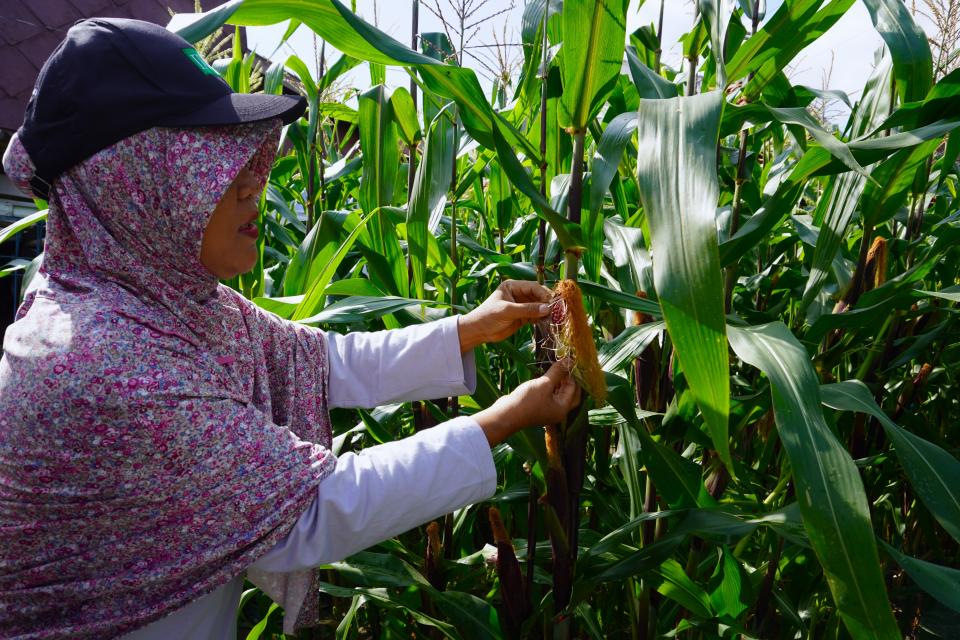
One such researcher was Amanda Grossi, Research Team Leader for Climate Action & Resilient Food Systems with the Alliance of Bioversity International and CIAT. Her story was published earlier this year on Food Tank: Against the Grain: How targeting Women with Climate-Smart Innovations Amplified Resilience. Amanda gave this feedback about the course:
“What I appreciated most was really diving deep into what constitutes gender-responsive and even gender-sensitive interventions. Despite my close work with colleagues to address [gender equality and social inclusion] issues, these distinctions were never clear to me. Now, I can not only write about such issues in a more confident way, but I am more critical of other writing and interventions claiming to be gender-responsive or -sensitive. I now know which questions to ask, which language to use, and good methods to tease out discussion on some of these complex and often-sensitive issues in interviews.”
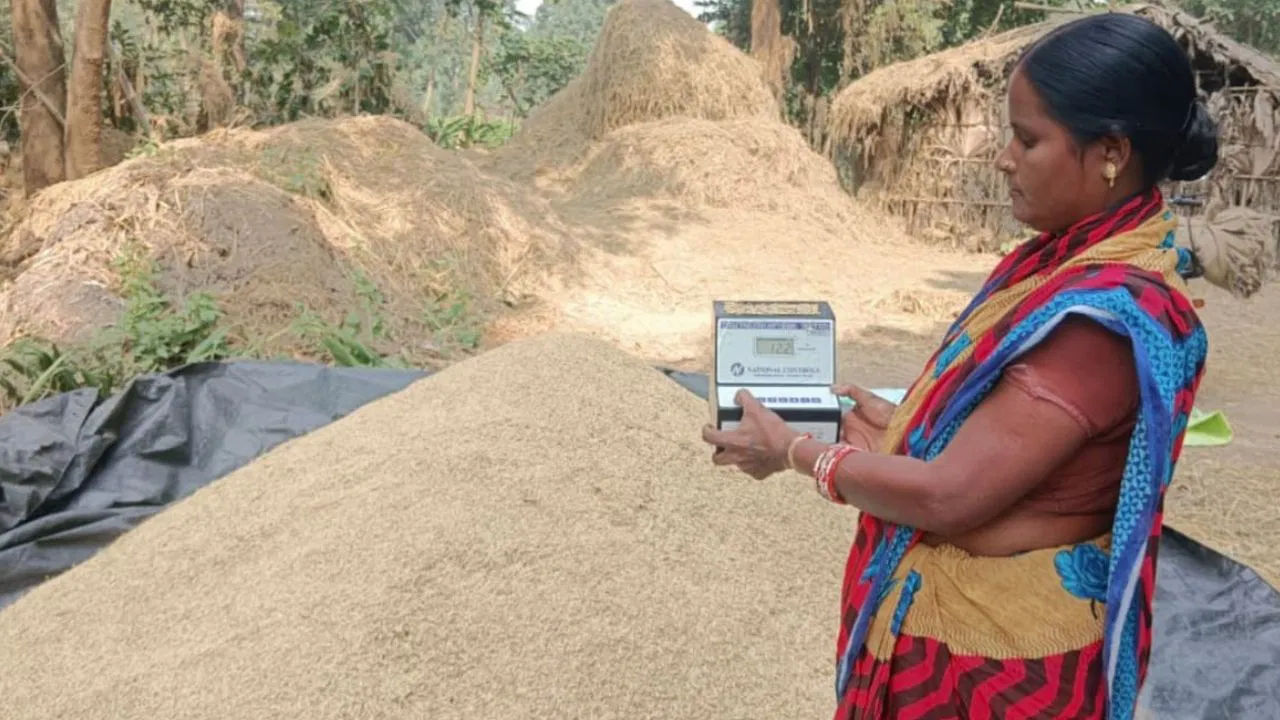
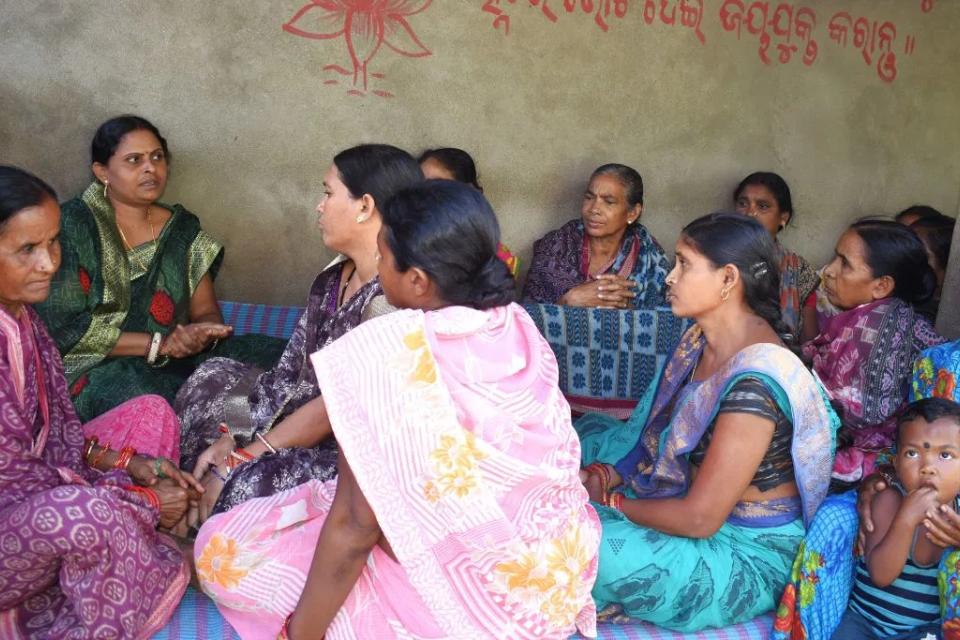
Devi reported on the women-led W-FPC initiative by IRRI in Balangir, Odisha, that empowers smallholder women farmers. Photo: Devi Prasad Mahapatra/IRRI
Participants in the workshop needed to commit to the eight 2-hour training sessions, plus two hours per week to do the training exercises and develop their story. Given this heavy commitment to the training, we also sought the agreement of each participant’s manager.
But the significant time the participants spent on the training paid off. By working with their individual mentors—which many said was key to their success—course participants developed and published their stories. Gloriana noted:
“I liked the interactive sessions and constructive feedback provided by the facilitators. Moreover, the effective mentorship and support given by the mentor was heartwarming and encouraging; this motivated me during the busy, exhausting work life.”
Interactive training builds storytelling skills
The eight training modules of the course were deliberately very interactive with a mix of discussion, progress updates, exercises, suggestions and peer-to-peer feedback.
Some also included expert panels who discussed gender-responsive research (module 1) and pitching stories to the media (module 7) with an opportunity for each person to pitch during the session.
The third storytelling series included a session with professional photographer and social scientist, Britt Basel, about Inclusive and gender-responsive visual story telling: Telling an impactful and inclusive story through your photographs. Training participants and other interested attendees (the webinar was run in two different time zones) found this session very useful for improving their photographs—for example, this evaluation feedback:
“I like how the course uses real cases from our experiences, and invites experts to help us really understand gender-responsive solutions in agriculture, and give[s] us input on how to capture wonderful photos.”
At the end of the third training series, participants reported a notable increase in skills in researching a story, structuring and writing a story, and understanding and including gender aspects in a story. Most of the participants (92%) rated the training as ‘extremely valuable’, with the rest rating it as ‘very valuable’.
The most-liked aspects of the course related to: hands-on interactive sessions, mentoring and feedback, advice from invited experts, the deep dive into gender responsiveness, and the follow-through of process. Devi Prasad Mahapatra, Knowledge Management Specialist with the International Rice Research Institute (IRRI), published his story on the Krishi Jagran magazine site: Breaking barriers: How Women-led Farmer Producer Companies Are Changing Agriculture in Odisha. He said what he liked best about the course was:
“… that the sessions are planned in such a way along with discussion and activities. So, the participants are completely engaged throughout the workshop.”
Kanwal Waqar, Deputy Country Representative with the International Water Management Institute, published her story in Pakistan Observer: Climate-Smart Irrigation: Driving Economic Gains for Women and Water Conservation. She said of the course:
“The knowledge and insights shared were invaluable, and I gained a great deal from this experience. I highly recommend this course to my peers. The emphasis on the importance of gender-inclusive language, along with practical aspects such as videography and photo credits, was particularly enlightening and well-delivered.”
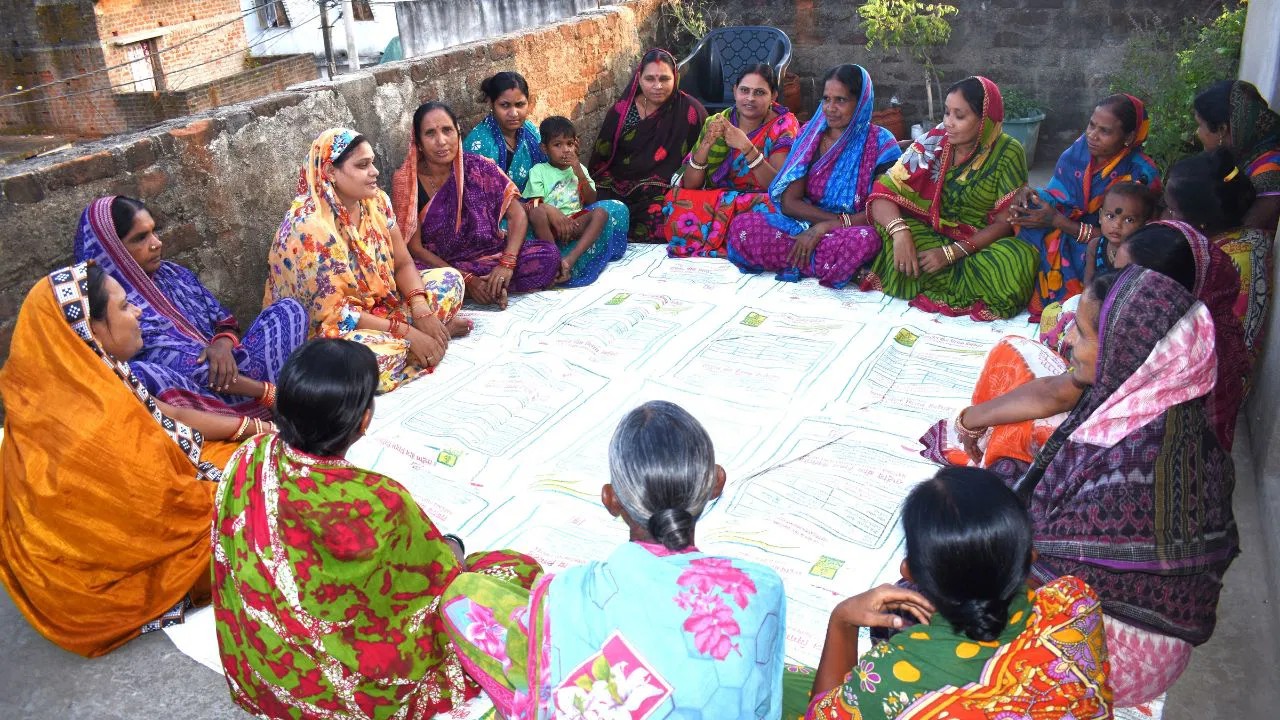
Devi photographed women of the W-FPC model, which aims to address challenges faced by women in agriculture by promoting collective action. Photo: Devi Prasad Mahapatra/IRRI
Resources available for ongoing capacity-building
A capacity-building outcome of the courses was the creation and publishing of a freely available 42-page training guide: Storytelling about gender-responsive agricultural solutions.
Available to anyone, the training guide covers the information from the eight training modules, and an updated form for structuring your gender-responsive news story (in Appendix 4). Participants used this form during the course to help them to structure and shape their stories.
Other resources developed through the training course and available to you on the CGSpace include:
Related content
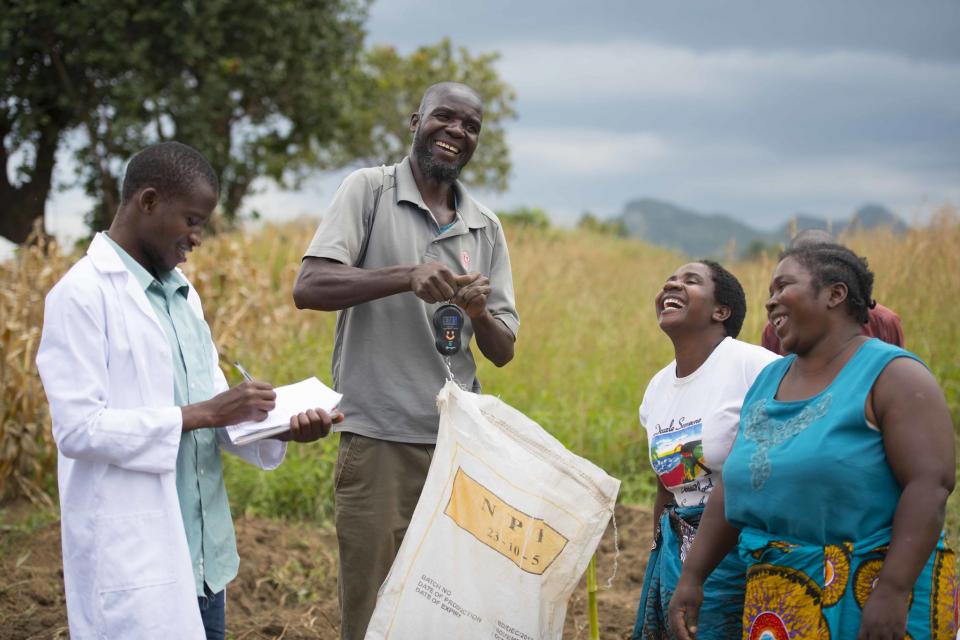
Two is better than one: researching the gendered impacts of agricultural technology through storytelling