Nigerian Women Farmers: From Subsistence to Thriving Agribusiness
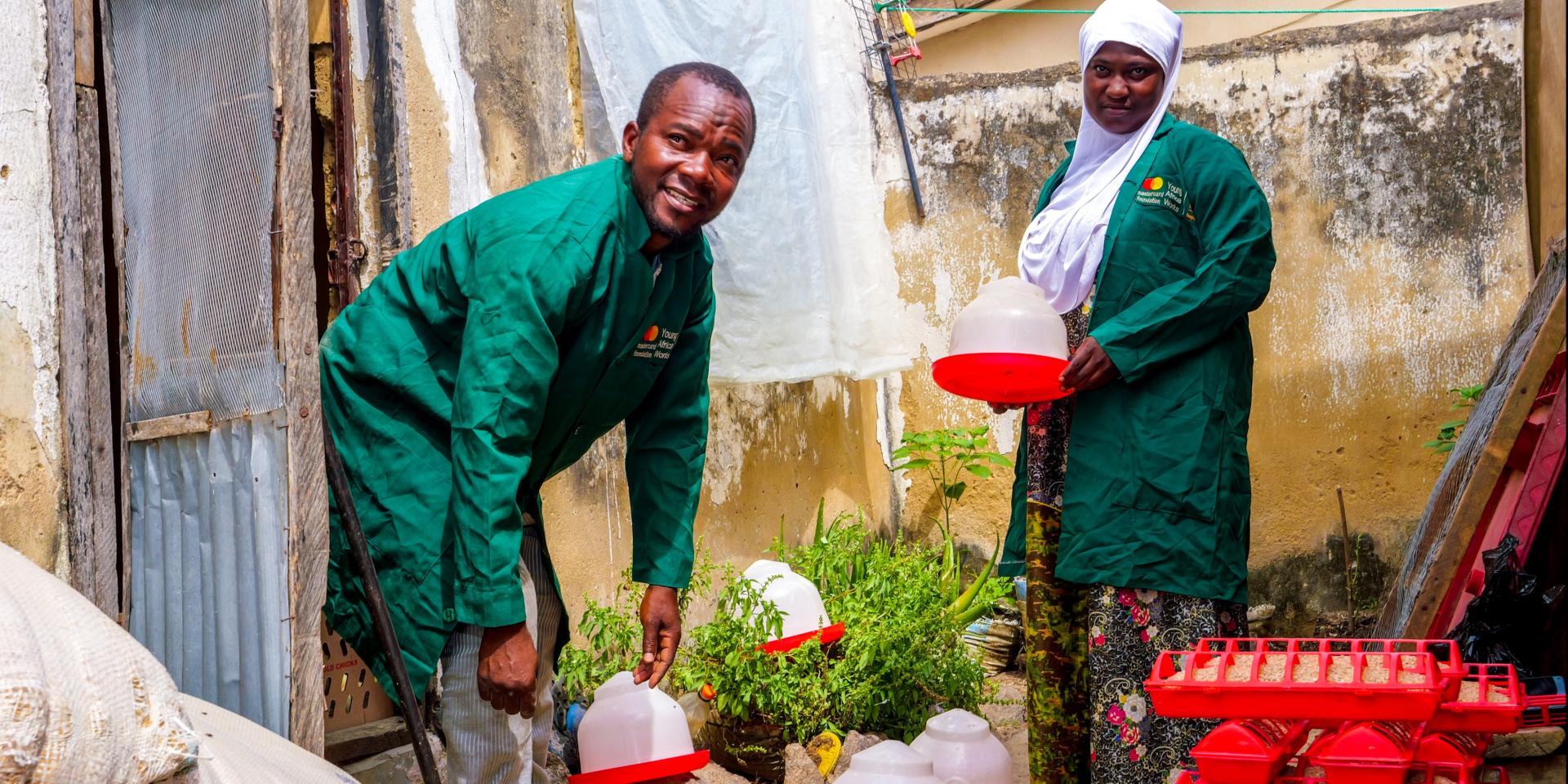 Photo: IITA
This blog post was authored by Jesutofunmi Sharon Robinson as part of the CGIAR GENDER Impact Platform training on telling stories about agricultural solutions that work for women. This training took place online between September and December 2024. This story was first published by Agrilinks, but is now reposted in full below.
Mariam Abass and Rukayya Muhammad were subsistence farmers in the northern part of Nigeria, producing just enough food to feed their families, until they came across an agribusiness training program that changed their lives.
This program has equipped them with the knowledge and skills to start and grow their businesses, which has significantly increased their productivity and placed them on the path of sustained profitability. For instance, one of the women disclosed that her net profit before the training was around a miserly N30,000, but that on applying the knowledge gained, her net income increased to a whopping N500,000, which she described as profound and life-changing.
“The training was invaluable, it taught us how to manage our business, connect with buyers, and join groups that expand our knowledge and help us grow,” Rukayya, who lives in Kano State stated.
Women farmers, particularly in the region, traditionally face low productivity and financial dependence on male family members. Culture and childcare responsibilities have historically hindered their participation in agricultural training, where they could gain access to modern skills, mentorship and resources to improve their agricultural practices.
However, that has begun to change, thanks to the agribusiness training designed for them by the Youth in Agribusiness Unit (IYA) of the International Institute of Tropical Agriculture (IITA).
Given the peculiarity of their situation, the IYA first ran community assessments to identify the constraints and specific needs of women in the region, particularly those interested in agribusiness training. This eventually led to an agribusiness training that targeted 70 per cent women participation.
The training covered topics like climate-smart farming techniques such as crop rotation, drip irrigation, improved livestock housing, feed optimization, vaccination, efficient waste management, renewable energy integration, and finance skills such as budgeting and record-keeping.
Mariam, who lives in Zaria, Kaduna State, noted that she had seen significant changes in her farm since participating in the training. “With the help of IITA, I now have vast knowledge in poultry business and marketing,” she stated. “I don’t sell my birds locally anymore. I have markets in Kaduna and Kano, and this has increased my income and improved my business insight.”
“Before we started the training, any time we stocked birds, we ended up recording losses and we lost our capital because we didn’t have much knowledge of the business. Miraculously, IITA came into our lives and that was where our journey to success started.”
To ensure nursing mothers are not distracted or excluded from the training, IYA provides childcare services and allows time between training sessions for recess. Additionally, the program allows couples to participate, both to eliminate the concerns of hesitant spouses and foster family support. The latter, according to Mariam, was the reason she could confidently participate in the training, describing the initiative as commendable.
Findings indicated that the training has enabled these women to evolve from subsistence farming into successful agribusinesses, boosting their income and making them to be part of the agricultural value chain. “Our business significantly improved after the IITA training,” Nasir Abubakar, who is Mariam’s husband, said with a tone of gratitude.
He added, “We gained marketing skills and this has helped us to attract better customers. After our last sales, we deducted our expenses and made a profit of about ₦500,000, whereas before the training, our profit was less than ₦30,000.”
Solomon Adebayo, Monitoring and Evaluation Manager at IITA, emphasized the need for women empowerment, saying, “Rural women, who make up about 43 per cent of the world’s agricultural workforce, face significant discrimination in land ownership, livestock ownership, equal pay, participation in decision-making roles, and access to credit.”
Concerned by these challenges, the IYA collaborates with organizations like the Mastercard Foundation, the International Fund for Agricultural Development (IFAD) and other partners to provide essential training and support that addresses the barriers women in agriculture face.
The women farmers, who have participated in the program, say the training has significantly improved their ability to manage businesses effectively. Relying on what she learnt at the training, Rukayya has established reliable connections with more buyers and sells locally to supermarkets and MaiShayi vendors (tea sellers). A new buyer from neighbouring Niger Republic recently purchased an entire batch of her broiler chickens.
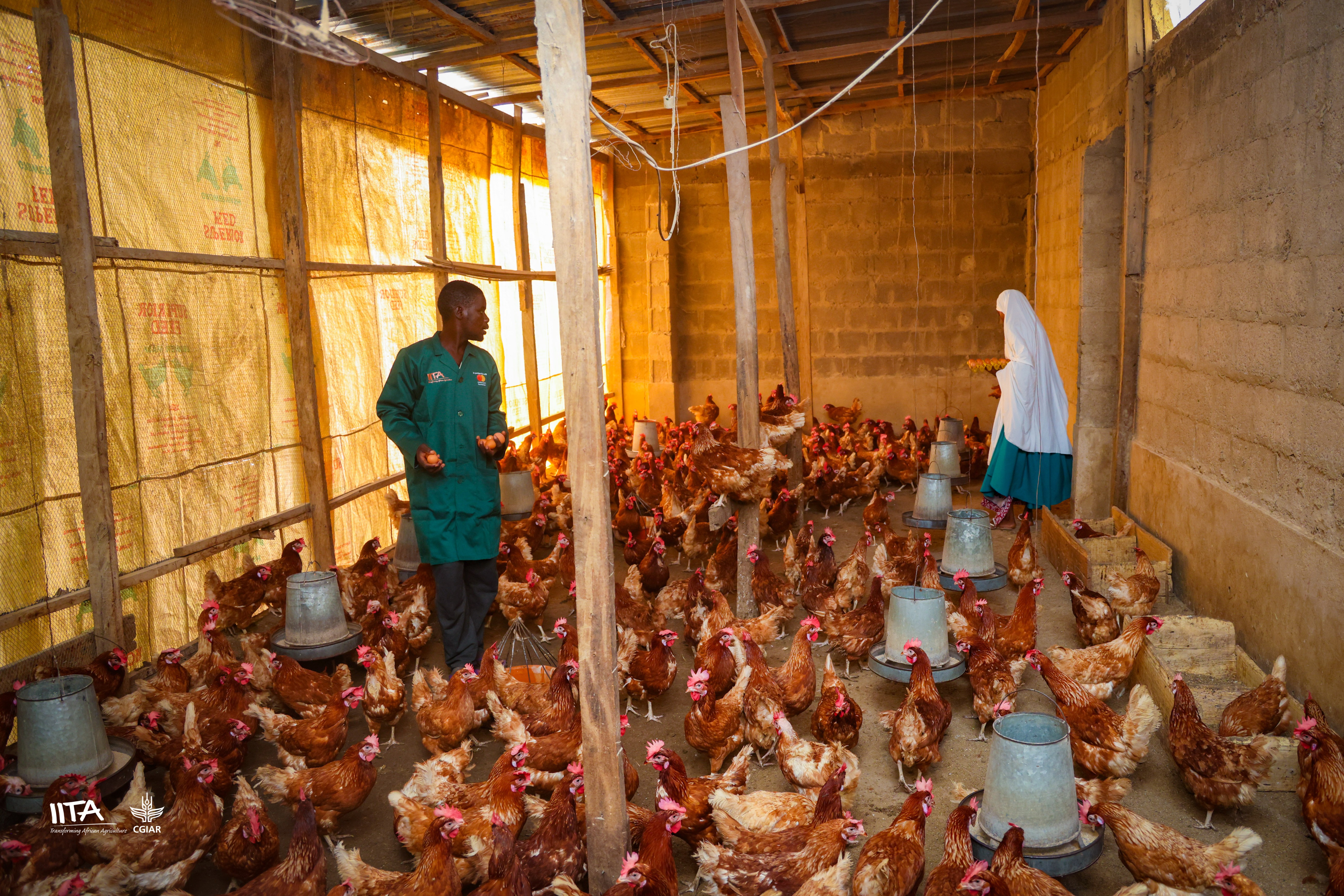
The training has also taught her the best way to keep her poultry healthy, such as cleaning the environment regularly, adjusting their feeding schedules, using clean water and giving them the right medication. She said that these changes had made her chickens healthier and increased her profits. “In the past, we had 600 chickens, but now we have 800. We added broilers to our poultry so we could gain more profit and expand our business,” she added.
With their expanded poultry business and increased income, Rukayya says her family’s living condition is improving, as they move to complete their building and provide quality education for the children.
Allowing spouses to partake in the training has been a crucial element of assisting the womens businesses to thrive. Mariam and Rukayya say their husbands are involved in the businesses, providing logistical support, helping to market the products and sharing responsibilities in the day-to-day running of the farm, which increases productivity.
“This intervention by IITA has changed our lives,” Nasir remarked. “We have paid our daughters’ school fees for the whole school year, and we have bought foodstuffs for the month, unlike before when we struggled to buy food daily.”
Through the collective efforts of IYA and its partners, women farmers are improving their livelihoods and reshaping their roles within their communities.