Equity and inclusion must guide water solutions
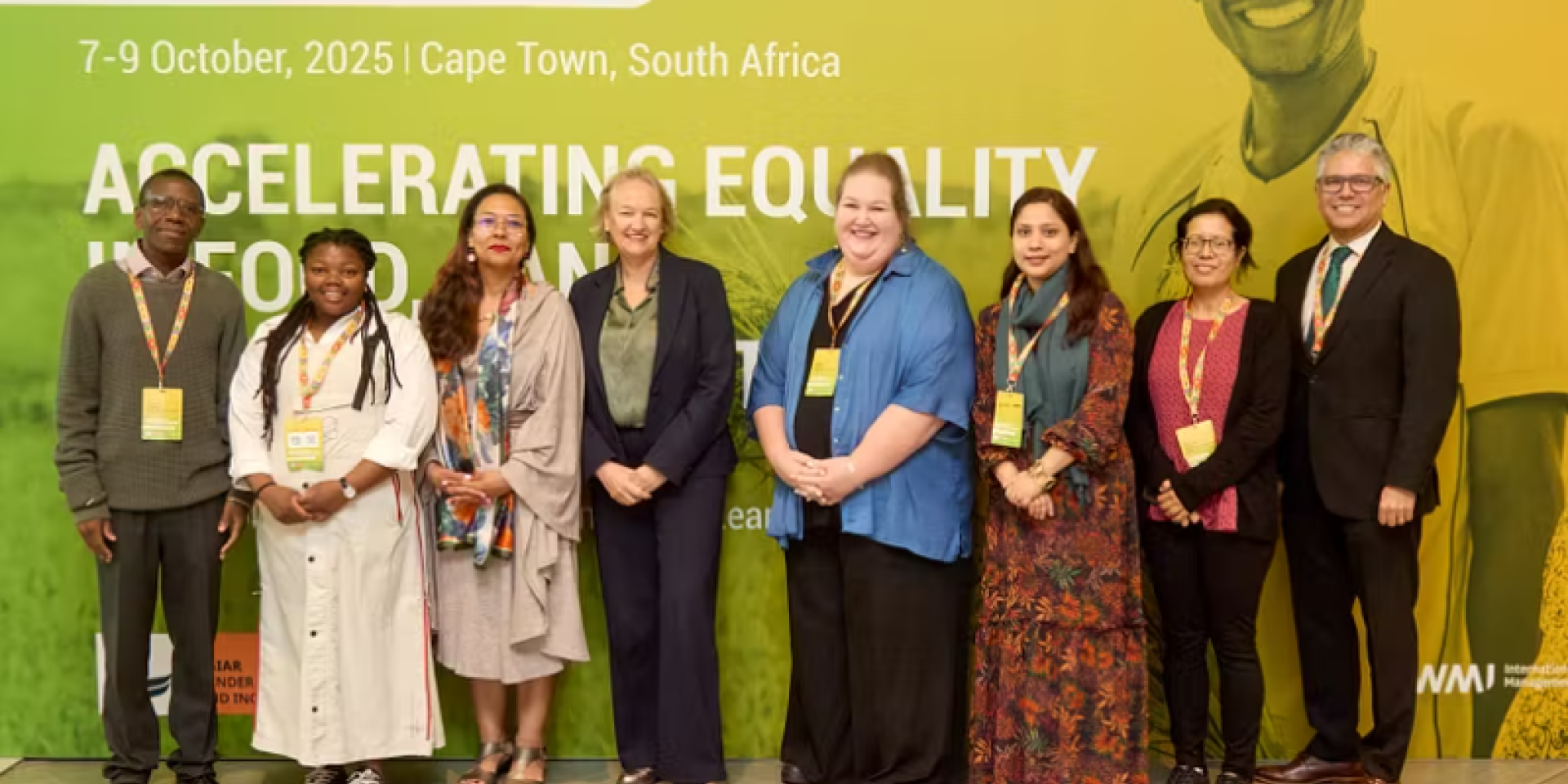
At the 2025 CGIAR Gender Conference, IWMI underscored that the future of water security depends on scaling equity as effectively as climate-smart innovation.
Water management that leaves no one behind requires inclusive innovations designed by, with and for those who are typically excluded from decision-making processes. This was among the key issues brought to the forefront by the International Water Management Institute (IWMI) at the 2025 CGIAR Gender Conference held in Cape Town, South Africa, from October 7-9, 2025. Under the theme, Accelerating equality in food, land and water systems, this year over 500 global researchers came together to redesign food, land and water systems at scale, to ensure equal access, voice and leadership for women, young people and marginalized groups in managing how water resources are used.
IWMI’s message was clear: if gender and inclusion are not integrated from the very beginning in climate and water security efforts, existing inequalities will only deepen. By 2050, under a worst-case climate scenario, climate change will push up to 158.3 million more women and girls worldwide into extreme poverty, forced to live under $2.15 per day. Food insecurity may also rise significantly, affecting up to 236 million more women and girls.
In the context of water security, the stakes are even higher because equitable access to water is critical to protecting livelihoods and helping communities withstand climate shocks.
However, these outcomes are not inevitable if we design and scale climate-smart innovations more responsibly.
Related content