Youth, Gender, and Food Systems in a Changing Climate: Insights from the CGIAR–Embrapa COP30 Side Event
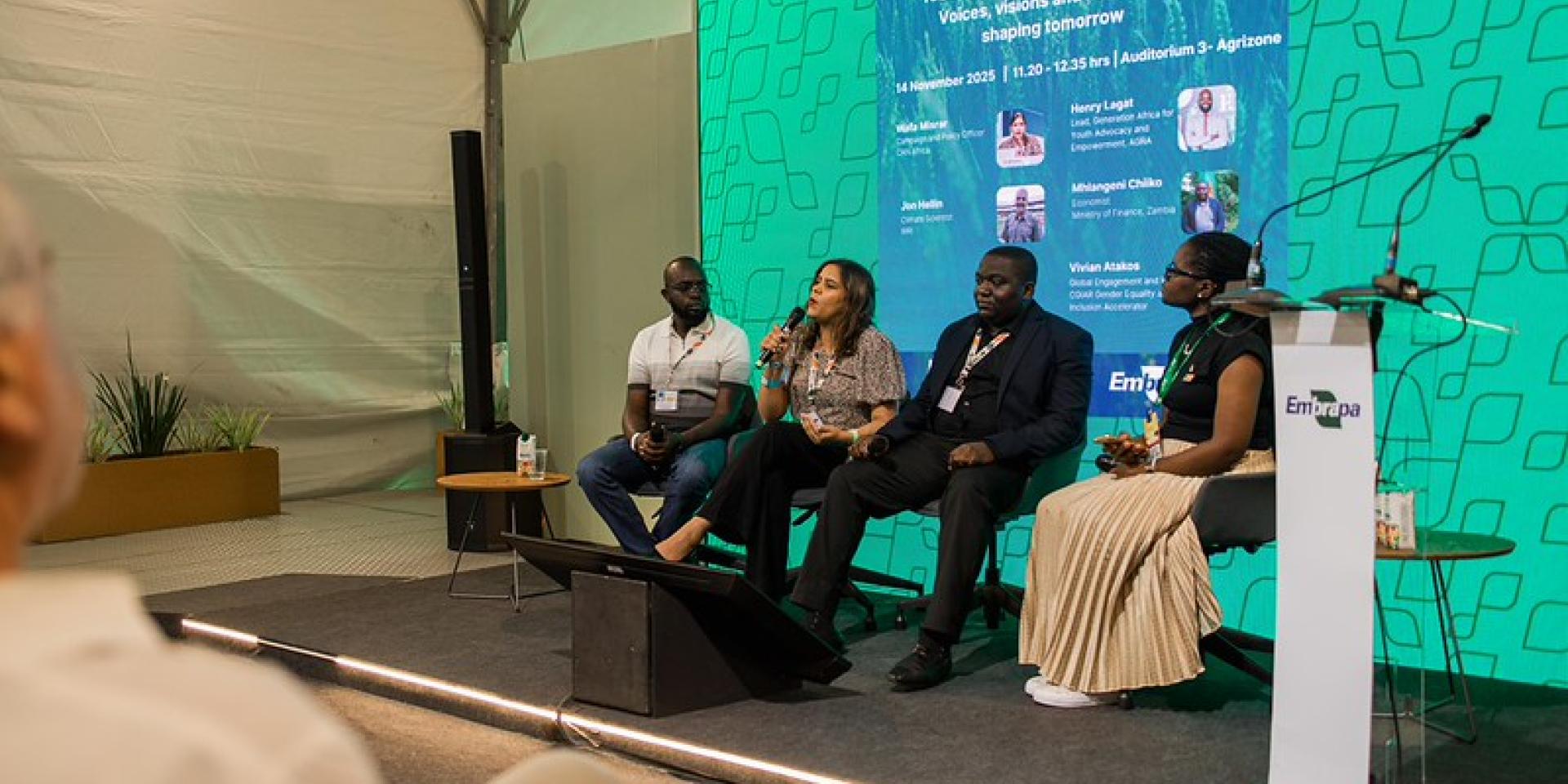 Photo Ronaldo_Rosa / Embrapa.
The CGIAR Gender Equality and Inclusion Accelerator brought together policymakers, researchers, agripreneurs, and youth advocates at the UNFCCC's COP 30 to unpack one central question: How can we scale climate-resilient food system innovation in ways that truly work for young people and women?
Held on 14 November at the AgriZone within Embrapa Amazônia Oriental (Embrapa Eastern Amazon)—just under two kilometres from the COP30 Blue Zone negotiation venue in Belém, Pará—the session created a dynamic space for dialogue, reflection, and shared learning. It illuminated both the opportunity and urgency of ensuring that gender equality and youth inclusion are not add-ons but central pillars of climate-resilient food systems.
The discussion surfaced a powerful consensus: the time is right, but meaningful transformation requires deep collaboration, intentional design, and research that is not only rigorous—but actionable.
Scaling is More Than Technology
Setting the scene, Dr. Jon Hellin, a Climate Scientist at the International Rice Research Institute (IRRI) with extensive field based research on gender sensitive climate adaptation frameworks, reminded us that scaling innovation is not simply the replication of technological pilots. It requires aligned systems, trusted relationships, and institutional capacity:
“Technology development is the easy part. Scaling happens in the space between partners—and often beyond our control.”
He emphasised that real transformation must address the root causes of vulnerability, recognise social disparities within communities, and ensure that adaptation pathways reflect lived experiences across gender and age groups.
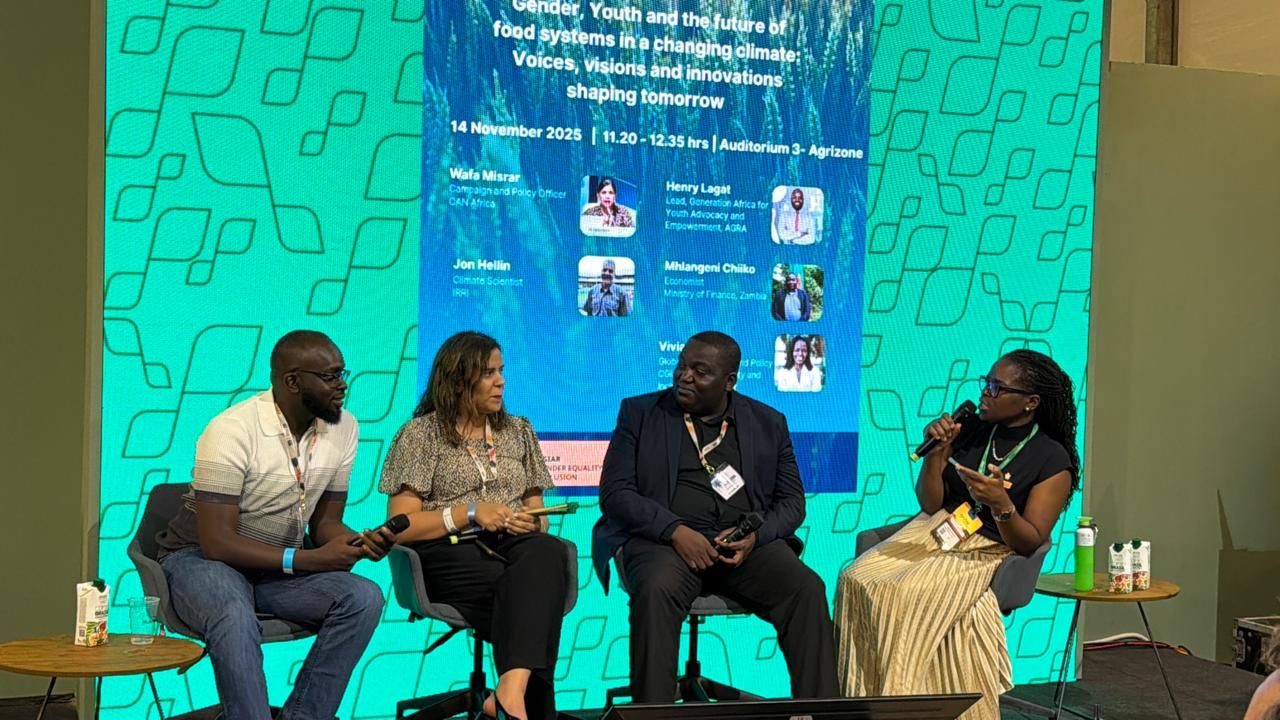
Panelists at the side event from left: Henry Lagat (AGRA), Wafa Misrar (CAN Africa), Mhlangeni Chiiko (Zambia) and Vivian Atakos (GENDER Accelerator)
Youth at the Centre—Not the Periphery
From government ministries to civil society, panelists echoed the urgency of designing climate action with youth, not for them.
Henry Lagat from the Alliance for a Green Revolution in Africa (AGRA) underlined the need to engage youth as partners and co-creators:
“Youth must be at the table—not as beneficiaries, but as decision-makers and innovators.”
He highlighted the importance of early exposure, mentorship, and investment in youth-led agribusinesses—supported by performance-based metrics that allow funders and governments to see what works.
Dr. Wafa Misrar, from the Climate Action Network, Africa and a member of the Consortium of African Youth on Agriculture and Climate Change (CAYACC), added that climate adaptation is increasingly political and global, yet deeply local. Without ensuring access to finance, and technology, youth participation cannot be meaningful. This reinforced the parallels with current UNFCCC negotiations on the Gender Action Plan—where means of implementation remain the most contentious gap.
Bridging the Digital and Financial Divide
Representing the Ministry of Finance in Zambia, Chiko Mhlangeni reflected on digital innovation:
“A smartphone in someone’s hand is not the same as having the capacity—or capital—to use it effectively.”
His work using digital platforms to improve smallholder resilience shows that access to information is important, but trust, capacity, and locally rooted delivery systems are what unlock true inclusion.
The Role of Research: Moving From Evidence to Action
The panel concluded with a strong call to the research community: make evidence accessible, timely, and co-owned by the youth and women it intends to support.
Research institutions like CGIAR were urged to:
- Collaborate more intentionally with youth networks, governments, and local innovators
- nvest in evaluations and performance-based frameworks
- Translate findings into tools communities can use
- Ensure no intervention causes harm—especially in contexts where gender norms are deeply entrenched
A Way Forward
If we are serious about climate-resilient food systems, we must invest in partnerships that bridge global frameworks and local realities. We need governments, funders, researchers, youth, and communities working as one ecosystem.
This conversation made one thing clear: inclusive scaling is possible—but only when we centre youth and women as co-creators, ground our actions in evidence, and commit to building trust where transformation begins—with communities.