What gets measured matters: Integrating gender in agricultural development research
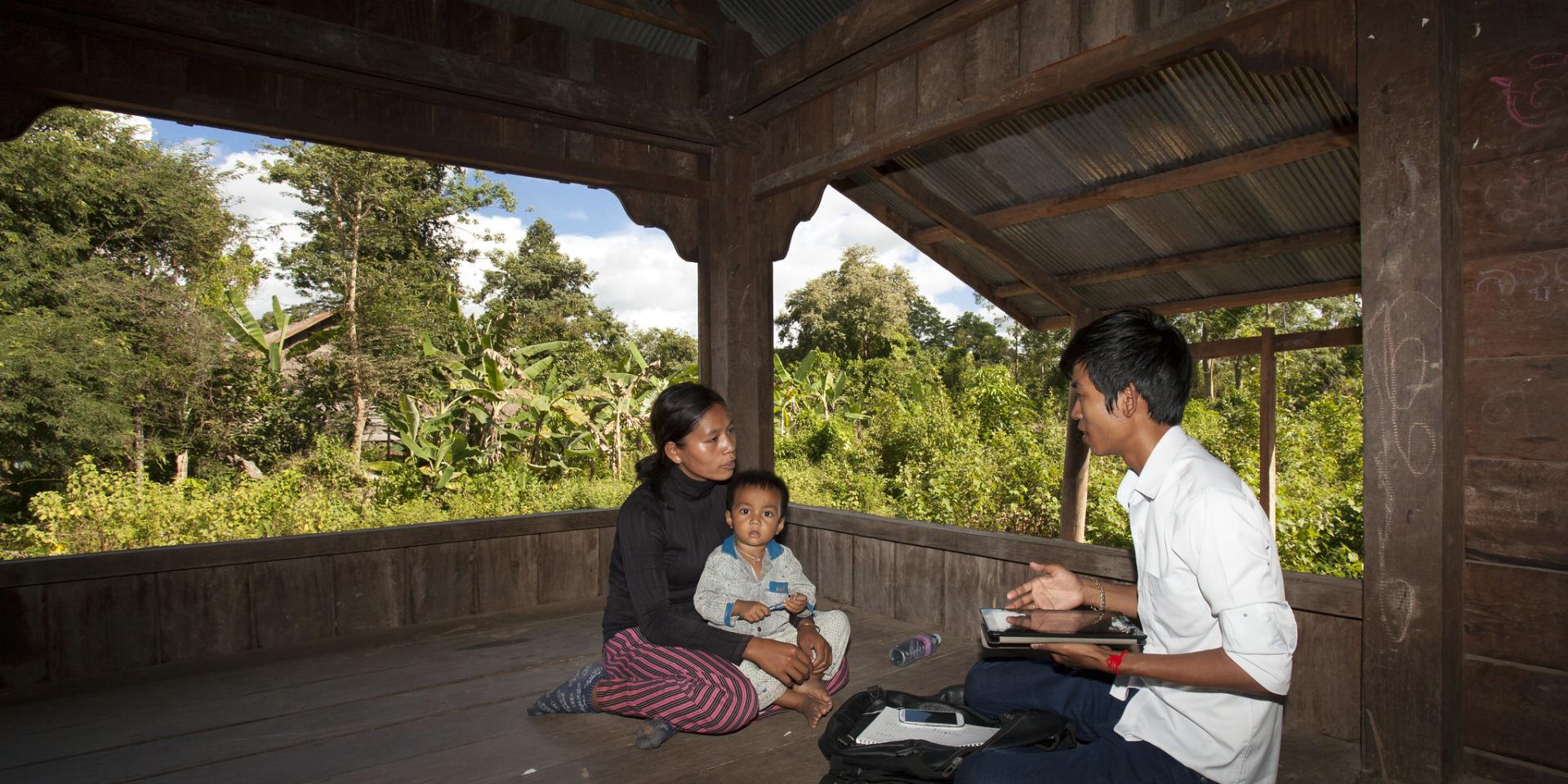 Photo: Milo Mitchell/IFPRI
Integrating gender into agricultural development research is critical not only to acknowledge the role women play in agri-food systems, but also to better understand the extent to which women have access to extension services, technology adoption, productivity, and market integration. It also helps uncover the factors that influence these outcomes and assess the effectiveness of interventions, particularly among women farmers.
Women make up a larger share of agricultural employment in countries with lower economic development, where limited education, infrastructure, and off-farm job opportunities constrain options. In many sub-Saharan African countries, women represent over 50% of the agricultural labor force. Similarly, about half of the agricultural workforce is female in several Southeast Asian countries. Yet, women’s access to assets and resources such as land, inputs, training or finance lag behinds men’s, leading to significant gaps in productivity (The Status of Women in Agrifood Systems). Evidence from Sub-Saharan Africa consistently shows that women-managed plots produce significantly lower yields than men’s—often due to unequal access to inputs, extension services, and productive resources, as well as structural barriers like discriminatory norms and market failures (Leveling the Field-Improving Opportunities for Women Farmers in Africa).
Integrating gender into agricultural development research is critical not only to acknowledge the role women play in agri-food systems, but also to better understand the extent to which women have access to extension services, technology adoption, productivity, and market integration. It also helps uncover the factors that influence these outcomes and assess the effectiveness of interventions, particularly among women farmers.
To properly integrate gender into agricultural development research, good data is crucial. Data should enable researchers to understand ownership, access, and decision-making at the individual level, rather than solely at the household level because the individuals within households do not always act as one. When designing survey modules, it is important to capture information on ownership, access, and decision-making related to key agricultural assets, inputs, and activities. For example, in sections concerning agricultural resource management, it is important to record information on land ownership, decisions regarding input use, crop selection, and how earnings from crop sales are managed. Modules on livestock ownership and management should identify individual animal ownership, and control over earnings from livestock sales or products. Sections on asset ownership will ideally identify not only if the household owns an asset, but specifically who within the household owns it and who makes decisions regarding that asset.