Strengthening impact on gender equality and inclusion
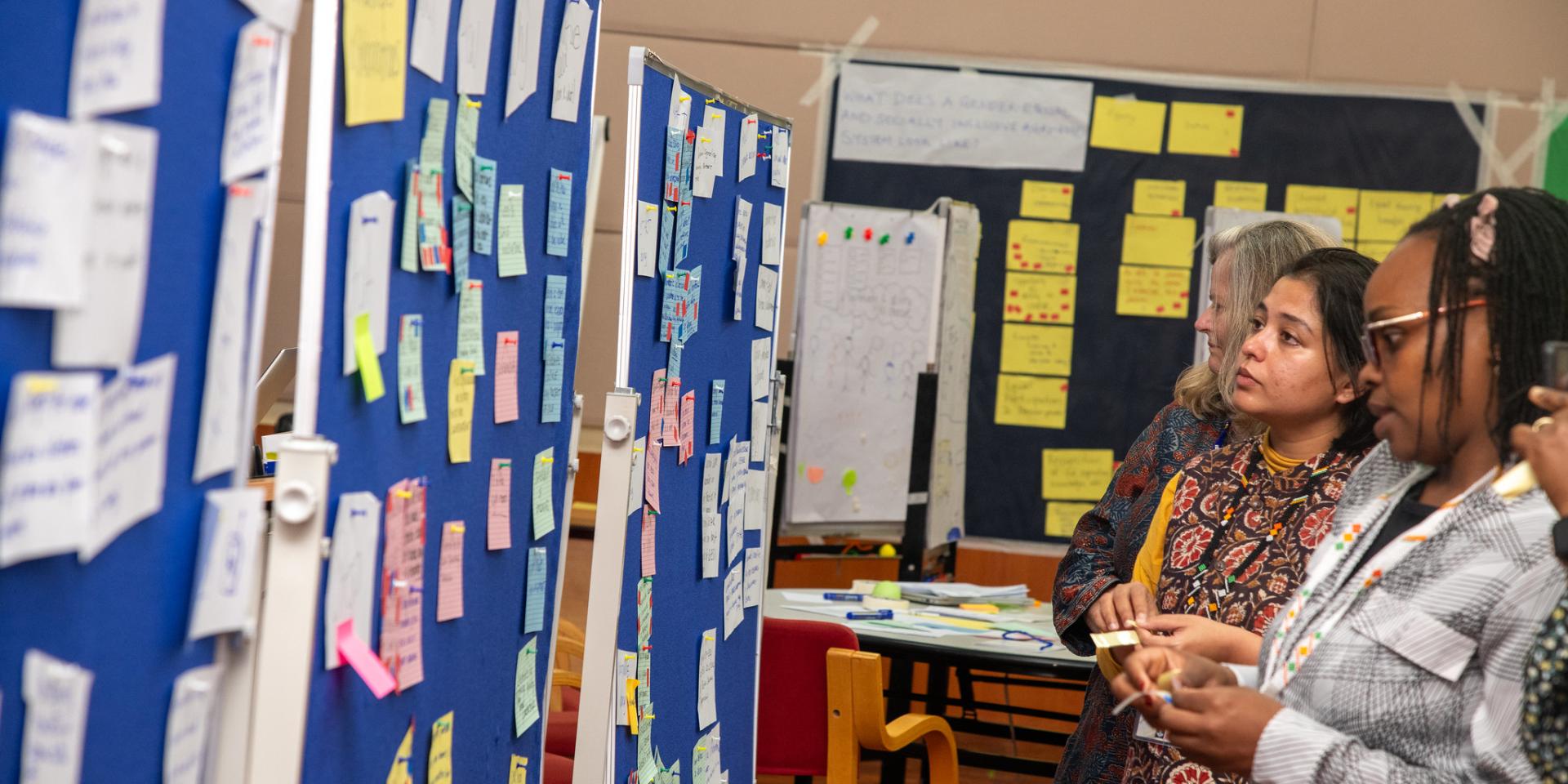
Every so often, it is important to stop, take stock and consider what we are doing and how we could do it better. In June, the CGIAR Gender Equality and Inclusion (GENDER Accelerator) invited gender researchers and social scientists working on impact assessments met to identify what CGIAR should start, stop and continue doing to generate an impact on gender equality.
While conducting research is CGIAR’s primary activity for generating impact on gender equality and social inclusion in agri-food systems, other key activities are equally as important.
A workshop of gender researchers and social scientists working on impact assessments began by discussing and defining gender equality and social inclusion in agri-food systems. Gender equality and inclusion, it was emphasized, should rest on the premise that women, youth and other groups have the opportunity and ability to exercise agency and make informed decisions.
“Gender equality and social inclusion refers to the equal rights, responsibilities and opportunities of all individuals in agri-food systems, regardless of their gender or other social identity labels”.
Impact and measuring it can be achieved through different activities
Discussions and exchanges also considered what constitutes impact and how to measure it, and exactly what an impact assessment entails, including various methodologies. At CGIAR, while we all aim to achieve and measure impact, impact is a comprehensive subject with a wide scope and can be achieved through different activities. From a research perspective, particularly relating to the design and implementation of impact assessments, a crucial aspect that emerged from the discussions was the importance of mixed methods and the adequate integration of quantitative and qualitative approaches to measuring impact. The focus should not be on debating which method is superior, but rather on how to effectively combine quantitative and qualitative methods, as they help us answer different questions. We should integrate more qualitative methods into intervention and impact assessment design.
Discussions then moved to identifying what CGIAR should start, stop, and continue doing to generate an impact on gender equality around three broad themes: research areas and methodologies, strategies for translating research into policy and new and existing partnerships and collaborations.
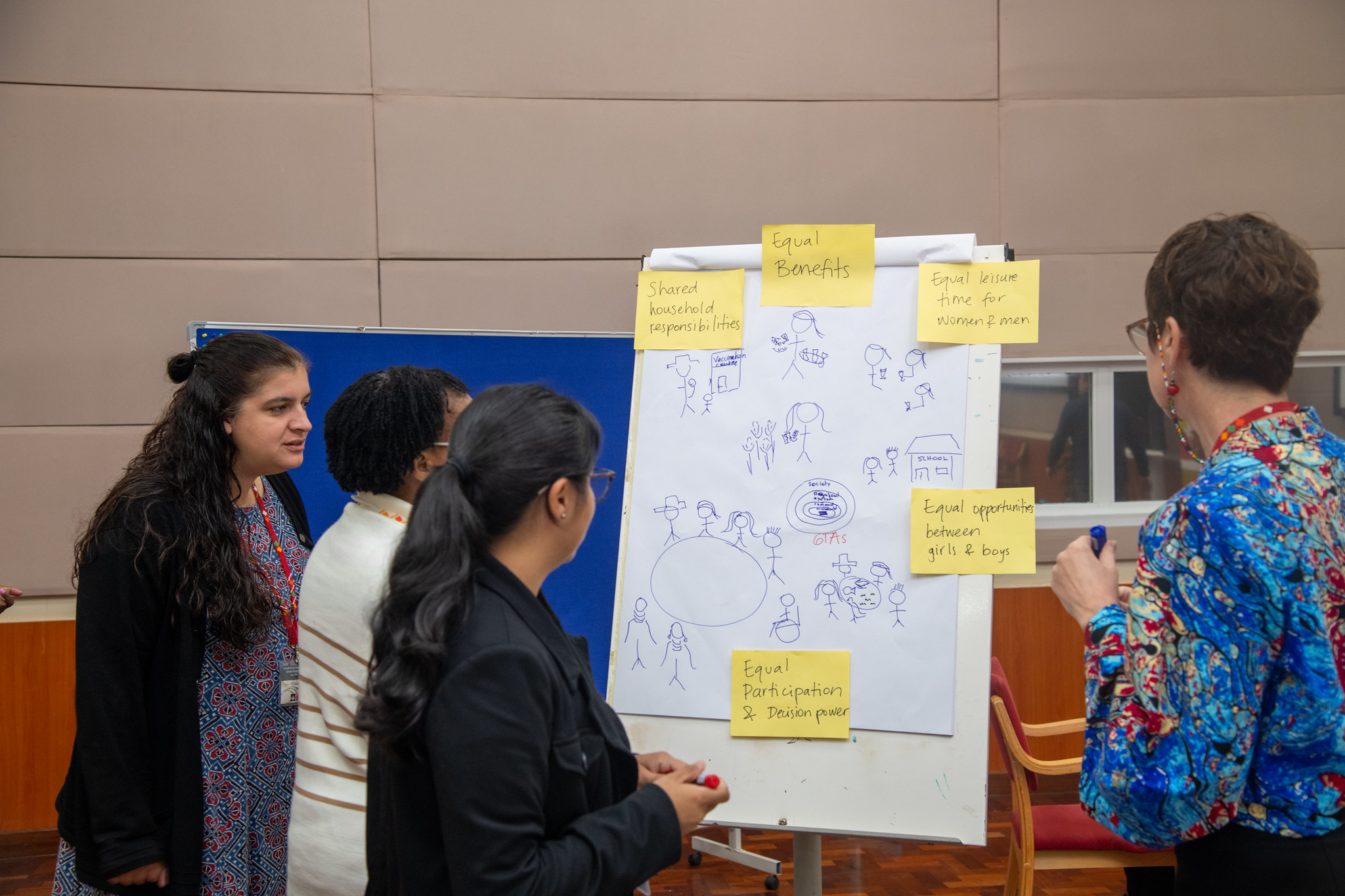
Researchers during a group exercise at the workshop. (Photo: N.Ronoh/CGIAR GENDER)
Theme 1: Developing research areas and methodologies
One of the themes focused on research areas and methodologies CGIAR should introduce, strengthen or prioritize. Participants agreed that to properly integrate gender into impact assessments, researchers must stop treating the household as a single unit and instead incorporate intra-household dynamics. More systematic evidence mapping is also crucial for identifying both research gaps and those areas that already have enough of an evidence base. Finally, it was emphasized that the research question should always drive the methodology, not the other way around.
Theme 2: Identify strategies for translating research into policy
The second theme was about identifying strategies for translating research into policy and practice on gender equality and social inclusion. Participants discussed how CGIAR research should start focusing more on demand signaling and co-design, looking at innovations from end-users’ points of view to ensure no unintended negative consequences for users. Co-design processes should cast a wider net to include a greater variety of stakeholders, including policymakers, community members and all farmers including women, men and youth.
Theme 3: Create new partnerships and collaborations and nurture existing partnerships
The final theme discussed how CGIAR should create new partnerships and collaborations and nurture existing partnerships to better generate an impact on gender equality and social inclusion. CGIAR researchers must stop working in silos and increase cross-center collaboration. We need to be more precise when selecting partners, recognizing that different partners are essential for different stages of projects and programs (e.g., research development, intervention design, impact assessment development, scaling efforts).
From discussion to impact: a collective commitment to making a significant impact on gender equality and social inclusion in agri-food systems
Many action points, follow-up discussions and work emerged from the workshop with participants taking action over the coming months from sharing what was discussed in the workshop, to advancing in identifying GESI research questions, to planning training on the synergies between quantitative and qualitative methods for intervention and impact assessment design.
In this way we hope to maintain the momentum initiated, leveraging the new connections made, the common interests identified and, most importantly, a collective commitment to working towards a significant impact on gender equality and social inclusion in agri-food systems. Watch this space.