Mind the gap: Making AI-driven advisories work for all farmers
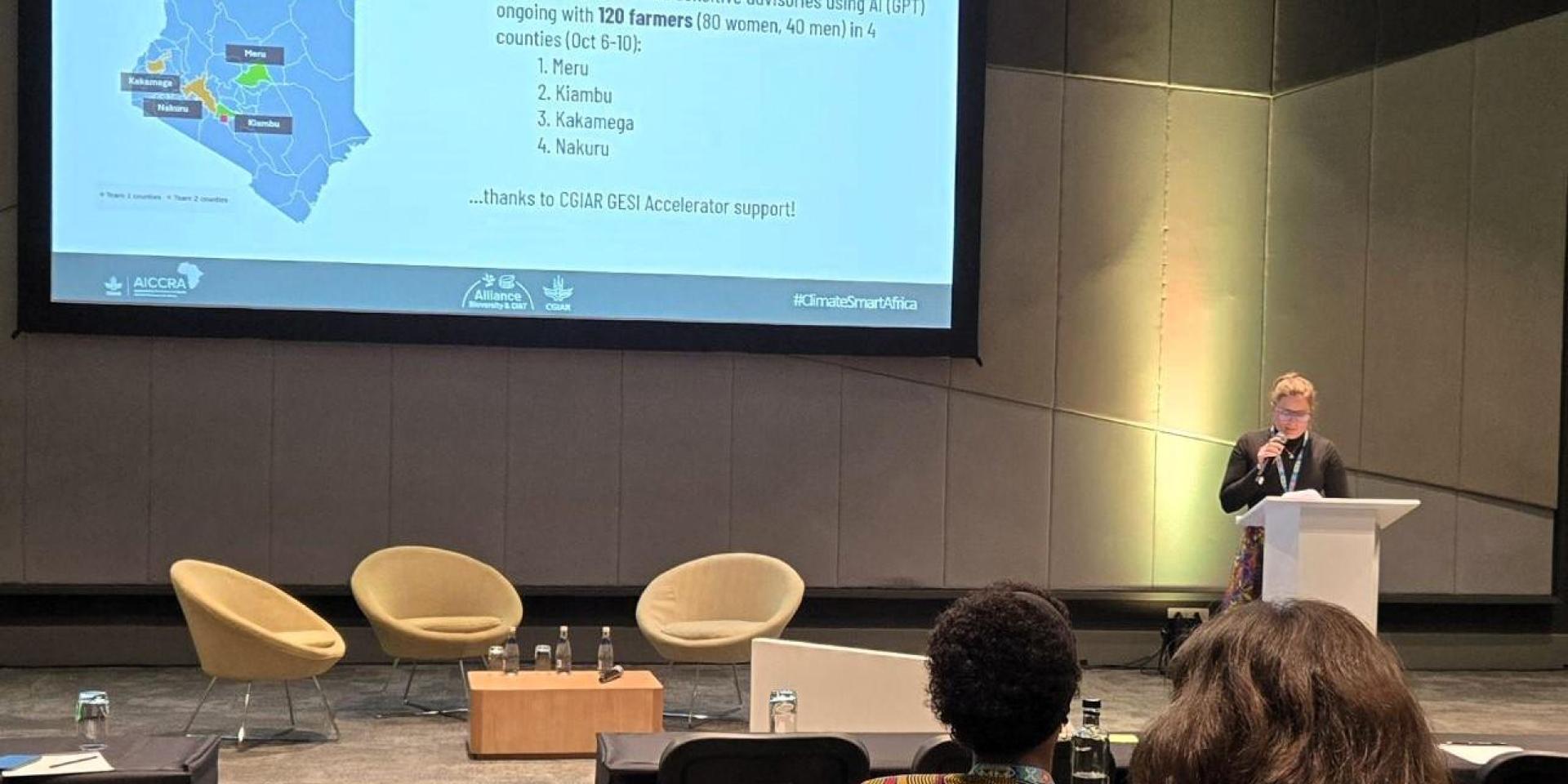
Artificial intelligence is transforming how farmers access agricultural and climate information.
In Kenya, a partnership between AICCRA, iShamba and the CGIAR Gender Equality and Inclusion Accelerator, is ensuring this transformation is responsible and inclusive. By refining GPT-5 outputs and applying human-centred design, the collaboration is generating new insights on how digital agro-advisories can better serve women and men farmers equitably.
Across Kenya, digital platforms are reshaping how farmers access agricultural and climate information. Among these, iShamba has emerged as a trusted service providing timely, tailored advice on weather and climate forecasts, crop and livestock management, and market prices to more than half a million (550,000+) farmers through SMS, voice, and WhatsApp. Yet despite such innovations, many women farmers remain underserved.
To address this imbalance, researchers from the Alliance of Bioversity International and CIAT, through the AICCRA project, in partnership with iShamba and the CGIAR Gender Equality and Inclusion Accelerator explored how artificial intelligence (AI) can deliver agricultural advisories that are more inclusive, equitable, and effective.
Over the course of 2025, this collaborative effort moved from identifying bias in digital advisory systems to refining and validating an AI-driven model—based on GPT-5—that integrates gender, language, and cultural considerations directly into advisory delivery.
Gender matters: Equity in digital agriculture
Women account for a majority of agricultural labour in Kenya but are 15–25 percent less likely than men to access digital climate advisory services. Barriers include limited phone ownership, digital-literacy gaps, high data costs, and social norms influencing technology use.
As climate variability and change intensify —with erratic rainfall, prolonged dry spells, and more frequent pest outbreaks —timely, tailored information is crucial for decision-making. Yet without intentional inclusivity, emerging technologies risk reinforcing existing inequities rather than overcoming them.
Understanding how these disparities manifest in digital systems —even before the addition of AI — was the first step toward designing AI that genuinely serves all farmers.