Mak, CGIAR GENDER Impact Platform drive equitable & inclusive agricultural development through enhanced gender & agriculture curricula
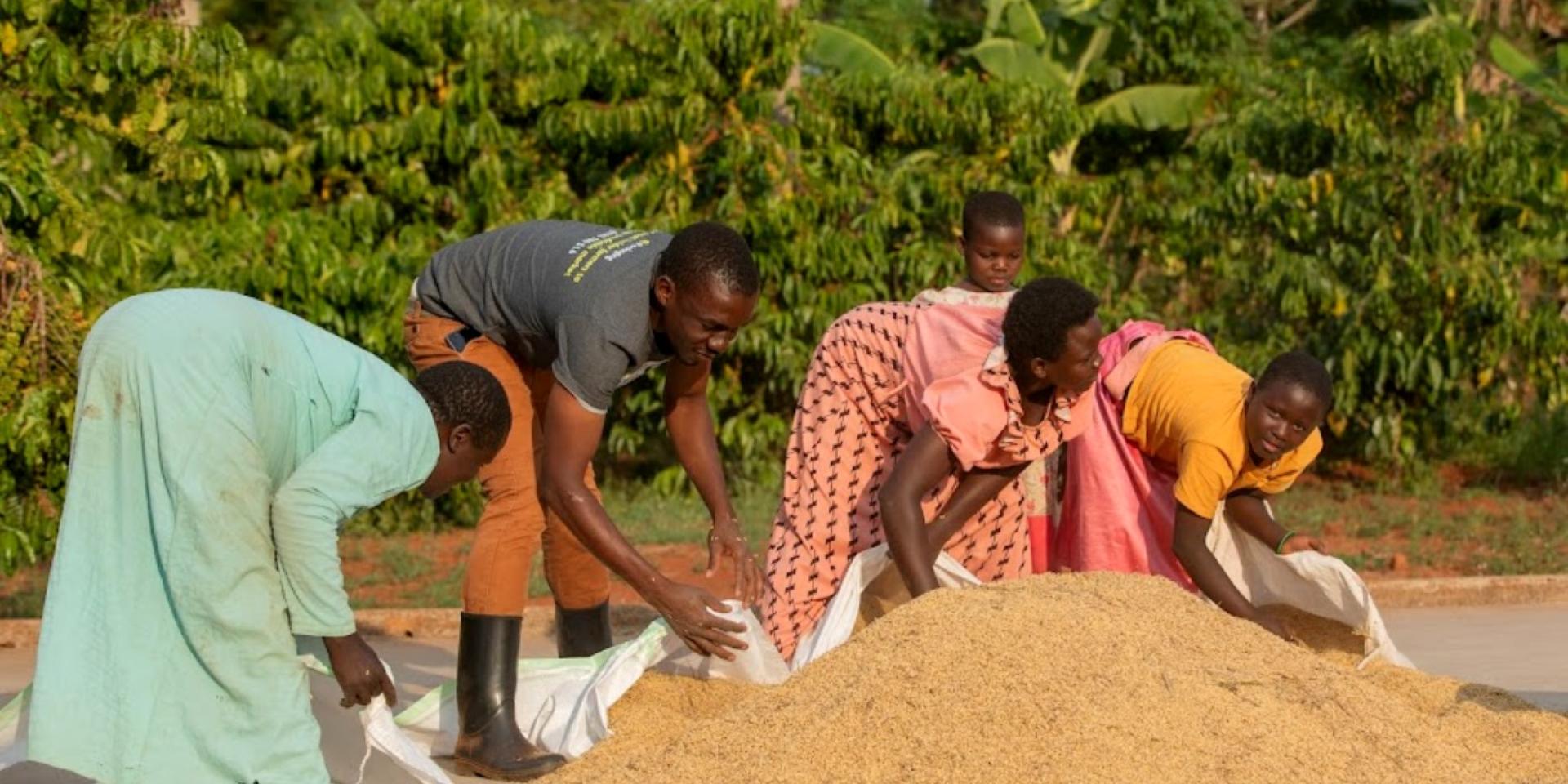 Photo: Kimbugwe Fredrick
This blog was originally posted on the Makerere University News Portal
In this blog, we share about efforts to enhance the gender and agriculture curriculum as an avenue to drive equitable and inclusive agricultural development. This work was done through a partnership between the Makerere University and the CGIAR GENDER Impact Platform.
Gender equality is a key pillar to achieving sustainable development goals. However, in agrifood systems, achieving these goals has been a challenge because of the complex social and gender relations that govern most communities in sub-Saharan Africa.
Although agriculture remains the backbone of many economies in Sub-Saharan Africa, providing livelihoods for a significant proportion of the population, gender inequalities are prevalent in this sector. For example, several gender-based constraints contribute to gender yield gaps. In addition, despite their immense contributions, women often face systemic barriers in agriculture as a result of social norms, which limit their access to and control over productive resources, decision-making processes, and agricultural extension services.
These disparities not only undermine gender equality but also constrain agricultural productivity, food security, and rural development. Addressing challenges such as these requires an understanding of the intersection between gender and agricultural development, which can inform policies and programming in the sector. One avenue to understanding and tackling these complex issues is through equipping professionals in agricultural-related fields with the necessary skills and knowledge through relevant curricula in institutions of higher learning.
University curricula as a pathway to tackle gender in agriculture-related issues
In a move to contribute to addressing the gap in gender-related knowledge and skills among agricultural professionals, the Gender-responsive Researchers Equipped for Agricultural Transformation (GREAT) Phase 3 initiative – a collaboration between Makerere and the CGIAR GENDER Platform – fortified the existing gender and agriculture curricula at Makerere University that was last updated more than 10 years ago. The course materials were revamped to align with changing needs and the latest knowledge and best practices in gender and agrifood systems. Graduates of these programs are to be equipped to handle the challenges in the world of work in gender and agriculture. The same initiative also supported the development of two innovative postgraduate programs in gender and agriculture at Makerere University– a Masters and a Post Graduate Diploma, due to be launched soon. These aim to provide transformative and innovative teaching, learning, research, and services responsive to dynamic national and global needs.
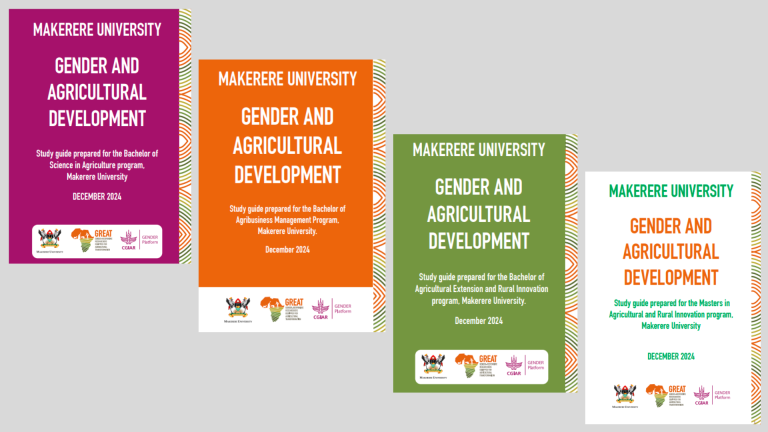
Revised materials hosted on the Makerere University e-learning portal.