Innovation and partnerships for a food-, nutrition- and climate-secure future
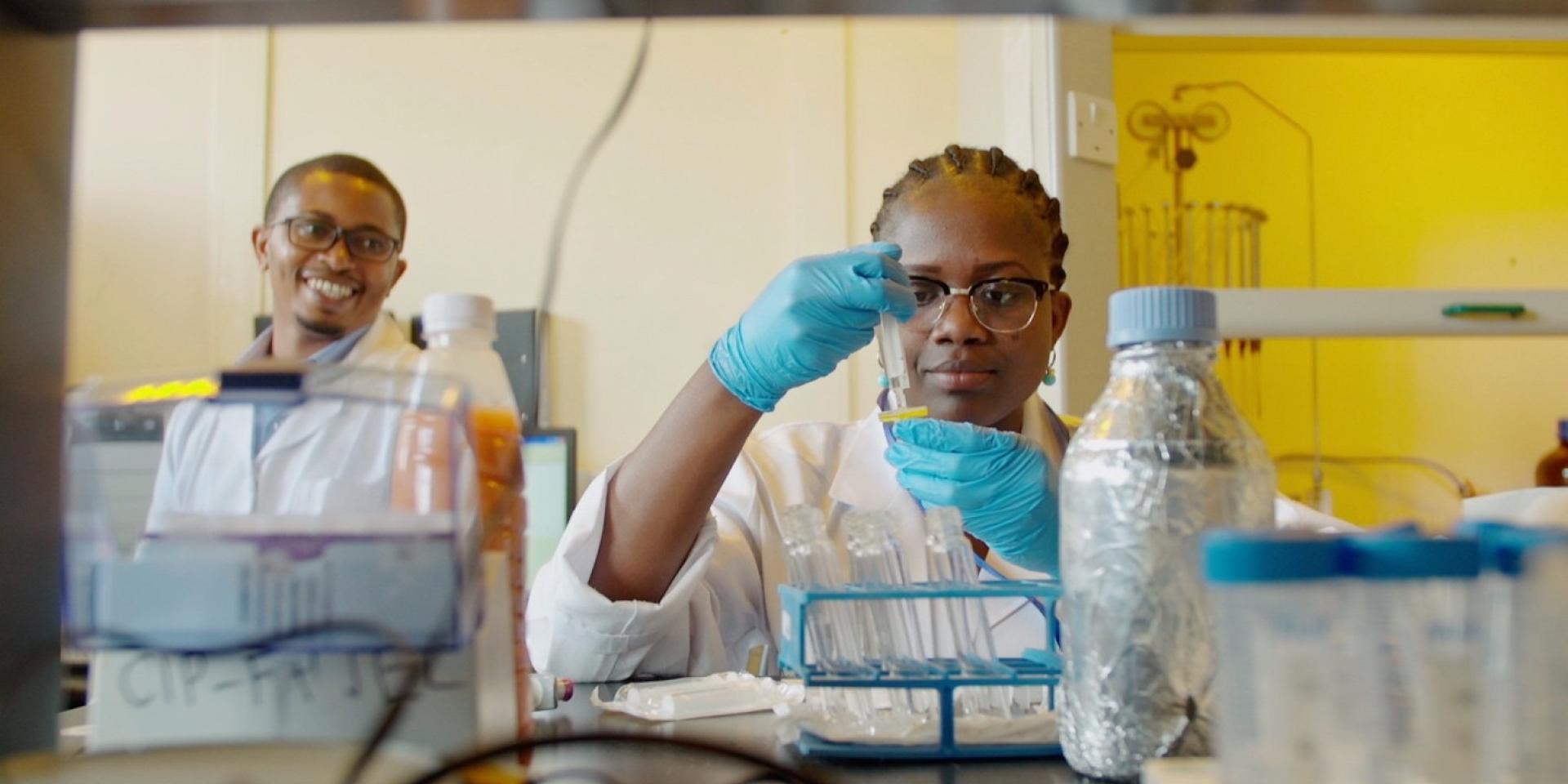 Photo: Hugh Rutherford / CIP
The sustainability of food, land, and water systems are threatened by major global challenges such as climate change, land and ecosystem degradation, biodiversity loss, food insecurity and malnutrition, rural poverty, and gender and social inequality in agri-food systems. The most vulnerable people and communities are at the greatest risk.
Recognizing the urgency of these challenges, CGIAR and the Kenyan Agricultural and Livestock Research Organization (KALRO) brought together the world’s leading scientists and decision-makers in agriculture, climate and health for the very first CGIAR Science Week.
The 2030 deadline to meet the Sustainable Development Goals is looming. The CGIAR GENDER Equality and Inclusion Accelerator has set its sight on closing the gaps that have held back food systems in lower- and middle-income countries.
Drawing on CGIAR science and partnerships from around the world, the Accelerator brought people together to discuss how we can enable fast global gains for gender, youth and social inclusion in agri-food systems. Participants learned about the CGIAR Research Portfolio 2025–2030 and the event also offered a chance to view transformative innovations improving the lives of vulnerable communities and explore CGIAR and partner labs and research stations to witness science in action during field visits.
At the current pace, it could take nearly 300 years to close gender gaps
Citing evidence from the FAO’s 2023 Status of Women in Agrifood Systems report, CGIAR’s Executive Managing Director, Dr Ismahane Elouafi, said a delay of 300 years to close gender gaps is not a future we can accept. “These inequalities hold everyone back. When women and marginalized groups lack access, agricultural productivity drops, resilience weakens, and communities become more vulnerable to shocks, resulting in less food and nutrition security, more poverty, and less resilient and sustainable food systems.”
In her keynote address, Committee on World Food Security Chair H.E. Ambassador Nosipho Nausca-Jean Jezile, pressed the urgency to address structural drivers of inequality and strengthen of the weak accountability mechanisms. The Ambassador pointed to the importance of science and data in providing policy guidance and advancing gender equality. “We need to be providing policy guidance that requires more actions than ideas. We need to synthesize data and make it available for decision makers. Data is fundamental for inclusive dialogue and participatory planning.”
Beyond policy, IDRC Vice President Santiago Alba-Corral said that we need to have difficult conversations with each other if we are to truly address the gaps especially those linked to privilege, “The gender gap cannot be reduced by only providing policy, training and tools. We need to think about part of the gap that is connected to privilege. And that is a very difficult conversation to have.”
CGIAR is leading the way in responding to the intersecting challenges in food systems
Through the new Accelerator on Gender Equality, Youth and Social Inclusion, CGIAR is leading the way in responding to the intersecting challenges in food systems and increase opportunities in food, land, and water systems for women, youth and socially excluded groups. The Interim Director, Dr. Nicoline de Haan, highlighted that the new Accelerator program will work to generate solutions for impact and lead change through evidence, in two critical areas of work, “Can we get cutting edge technology into the hands of women and co-design them so that we know what they need?”
With an extended mandate to support young farmers, the new program will also research what is preventing them from meaningfully engaging and benefitting from the agri-food systems. De Haan highlighted how CGIAR is building data and evidence, policies, solutions, interventions engaging youth. “Who is going to feed us in the future—the youth. Let’s set them up for success right now.
Collaborative efforts are needed to beat the ticking clock
A panel of experts called for a change in culture and highlighted the need to collaborate better to beat the ticking clock towards achieving the Sustainable Development Goals. Dr Oscar Ortiz, Interim Director for the Sustainable Farming Systems Program highlighted that CGIAR’s new programs provide an opportunity to deliver better solutions, stating “We have not been connecting sufficiently within CGIAR and with our external partners. In the new portfolio, we have a significant opportunity to connect the dots more efficiently and accelerate change.”
Panel member Lisa Hilgers, Advisor for Gender Equality and Social Inclusion at GIZ, highlighted the point by saying we need to stop working in silos and prioritize gender and inclusion beyond ticking a box: “We need to raise awareness and focus more on talking about women as agents of change.”
Jackline Makokha, Director of Gender at the State Department of Gender and Affirmative Action in the Government of Kenya, added it is important to have women, youth and excluded groups at decision-making tables to add their voice and lived realities into the policies and decisions that affect their livelihoods. AnnaKarin Norling, Senior Advisor at Swedish International Development Agency, called on partners to hold governments accountable and help them to live up to their commitments to the Beijing Action Plan. AGRA’s Director for Gender Equity, Youth and Inclusiveness, Nana Amoah, added that we need to address institutional gaps to support equality and food systems
Evidence, incentives and leadership: Towards a food future with equality at the centre
The first CGIAR Science Week was an opportunity to advance research and innovation, inspire action, and establish critical partnerships that can secure investment in sustainable food systems to nourish both people and the planet.
In her closing remarks, CGIAR’s Chief Scientist, Dr Sandra Milach, stated that the journey towards an equitable food future cannot be done in isolation. “Gender needs to be permeated through every program. We cannot do it alone.”
Milach added that we will need “…evidence to show the power that we have in food systems to make significant change; incentives, work with policy programs and leadership all levels.”