From the ground up: Rethinking and reshaping power structures in climate-affected food, land and water systems
 Photo: IRRI
CGIAR institutions and partners have generated new evidence and co-designed innovative solutions to enhance gender equality and boost climate resilience in food, land and water systems in low- and middle-income countries.
With an eye toward shaping future research agendas, a side event to the 2025 CGIAR Science Week titled ‘Gender equality and inclusion: Transformative solutions for gender equality in climate affected food, land, and water systems’ showcased research as an entry point for in-depth conversations with key partners and the audience about the relevance, the value, and transformative and scaling potential of this work.
This powerful session was not just a discussion—it offered a blueprint for action. It reminded us that gender equality is not a side goal; it is the main pathway to climate resilience and equitable food systems.
Setting the stage: Investing in interventions grounded in strong research, strategic partnerships and systems-level change
Susan Kaaria, Director of African Women in Agricultural Research and Development, opened the event by emphasizing the stark gender disparities embedded in agrifood systems. Although women make up nearly 49% of the agricultural labor force in sub-Saharan Africa, they remain excluded from decision-making and are denied equitable access to critical resources. Structural barriers, ranging from insecure land rights and heightened vulnerability to impacts of climate change, continue to reinforce these inequalities.
The conversation goes beyond statistics: it speaks to the daily lived realities of women who walk longer distances for increasingly scarce water, who are overburdened by unpaid care work, and who are hit hardest by the impacts of climate shocks. Dr Kaaria’s call to action was clear: invest in and scale gender-transformative interventions, grounded in strong research, strategic partnerships, and systems-level change.
Session highlights: Innovation meets inclusion
Led by CGIAR gender researchers and partners, the event showcased a range of initiatives that are breaking silos and reshaping norms and offering a glimpse into what truly inclusive, climate-resilient development can look like.
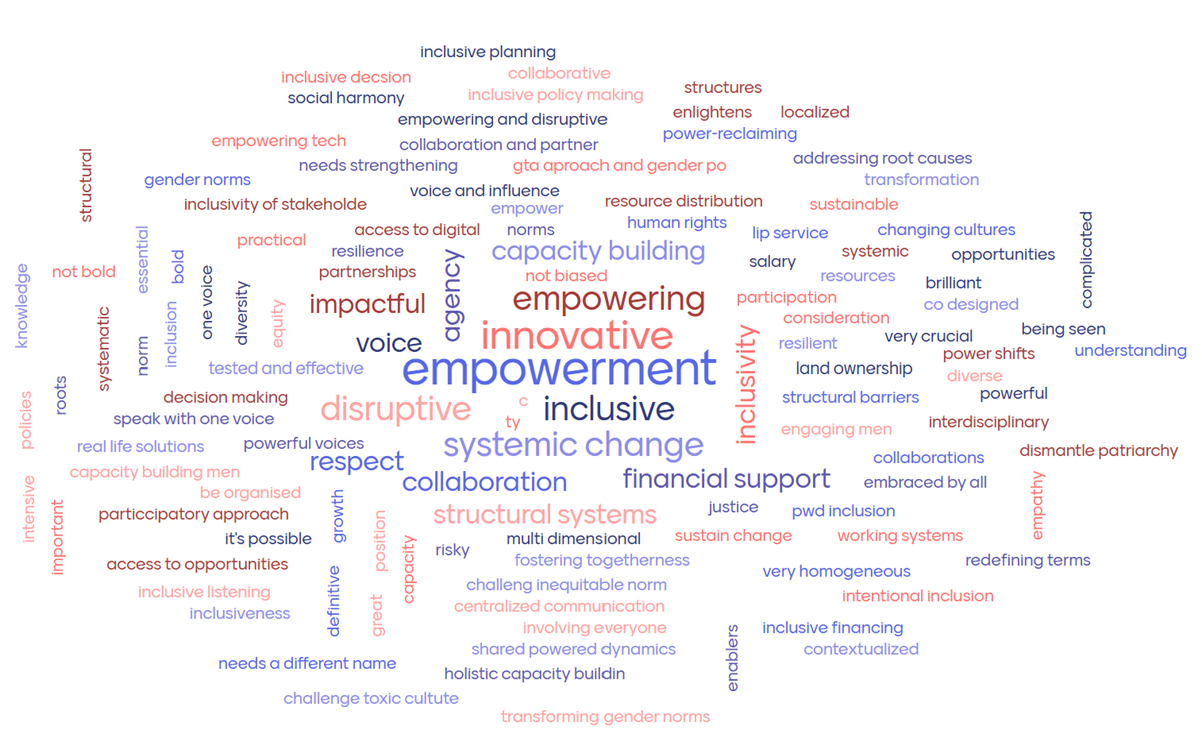
The audience was asked: How would you describe transformative solutions for gender equality and inclusion? The poll resulted in a word cloud that highlighted a broad range of opinions.
Mapping vulnerability; driving policy
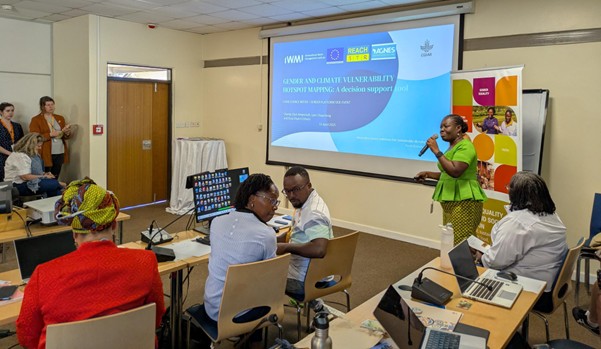
Charity Osei-Amponsah from the International Water Management Institute and Lynn Chepcheng from African Group of Negotiators Expert Support shared interactive gender-climate vulnerability hotspot maps used in Ghana and Kenya. These maps, where possible, layered with sex-disaggregated data, help identify where women are most at risk and guide policy responses across sectors—from agriculture to water and energy. These powerful tools make invisible inequities visible, prompting targeted, inclusive interventions.
Bundling social and technical innovations
In Kenya and Ethiopia, Eileen Nchanji and Dessalegn Molla from the Alliance of Bioversity International and CIAT are proving that bundling technical solutions with social innovations is key. From co-designed training manuals in local languages to incorporating indigenous knowledge, their projects empower women farmers with tools and voice. These solutions are co-created with communities to help ensure context relevance and sustainability.
Community dialogues and shifting norms
Ojong Enokenwa-Baa from IWMI, Katrina Kosec from the International Food Policy Research Institute and Annet Mulema from the International development Research Centre highlighted the role of gender-transformative approaches such as the Gender Action Learning System and community dialogues to challenge harmful gender norms. Whether by helping women gaining confidence to lead in Nigeria, shifting narratives around gender norms or supporting women to access technologies, gender-transformative approaches are reshaping power dynamics and sparking systemic change.
Addressing the root causes of problems
Nelly Njiru and Els Lecoutere from the International Livestock Research Institute and Emily Gallagher from the Center for International Forestry Research and World Agroforestry shared work that seeks to address some of the root causes of gender inequality, starting with the importance of working with local partners to co-design gender-transformative approaches that are locally relevant and context specific. While the focus of their work is on supporting women, the speakers cited the need to reintegrate men into processes, including engaging men as gender champions, reflecting the need for fully inclusive approaches.
What happens when women are supported to lead
Katrina Kosec from (IFPRI) showcased empowerment training in Nigeria and Manohara Khadka (IWMI) highlighted the WEFE (Water, Energy, Agriculture and Ecosystems) Nexus Leadership Program in Nepal, offering compelling evidence. In both programs, women participants reported increased community engagement, access to income-generating opportunities, and greater self-confidence. Rahma Adam from WorldFish presented about the need to provide immediate- and medium-term interventions to address the severity of the challenges faced by local fisher communities, as well as to work towards sustainable, long-term change. Lucy Obungu from Kenya Fisheries Service and Dorothy Amwata from Murang’a University of Technology stressed that no youth or woman is the same, and programs garner the best results when they tailored to the special interests and needs of each particular group of women and leaders.
Center community voices, break silos, fund transformation
For the final plenary panel, Susan Kaaria, Annet Mulema and Jackline Makokha, drove home three imperatives:
- Center community voices, especially women, youth, and people with disabilities.
- Break silos—collaborate across sectors and with grassroots organizations.
- Fund transformation, not just participation—support bold, feminist approaches that tackle root causes of inequality and exclusion, not just symptoms.
As Mulema concluded, “We need to decolonize how we fund. Let’s get more resources into the hands of grassroots organizations and build their capacity.”
Final thoughts from the audience
As the inaugural CGIAR Science Week drew to a close in Nairobi, Kenya, gender researchers from across the CGIAR presented a clear message: if we are serious about securing the future of food, land and water systems, we must center inclusive, gender-transformative solutions. In the face of mounting climate threats, particularly across the global South, the need to dismantle structural inequalities and amplify the leadership of women and socially excluded groups has never been more urgent.
As observed by an audience member, “Power is both the problem and the solution. Implementing gender-transformative approaches taught me that inclusion isn’t just about ticking boxes, it’s about shifting who holds decision-making power.”
Another audience member remarked, “Transformation demands discomfort. Today’s session reminded me that real change doesn’t come from consensus—it comes from courage.”
We can only create truly sustainable, resilient and just food, land and water systems if we rethink and reshape power structures—who holds power, who gets to participate, and how communities build resilience, from the ground up.
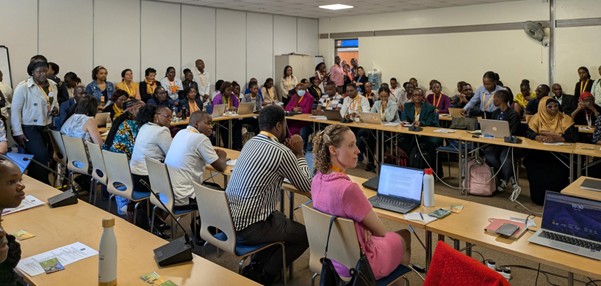
Audience members from the ‘Gender equality and inclusion: Transformative solutions for gender equality in climate affected food, land, and water systems’ session, share their thoughts about securing the future of food, land and water systems.