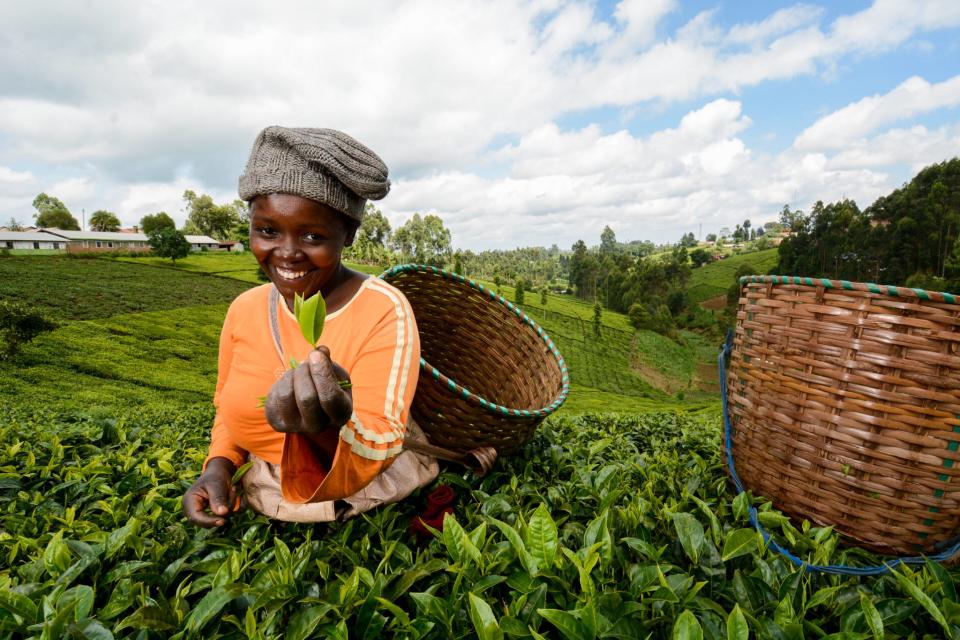
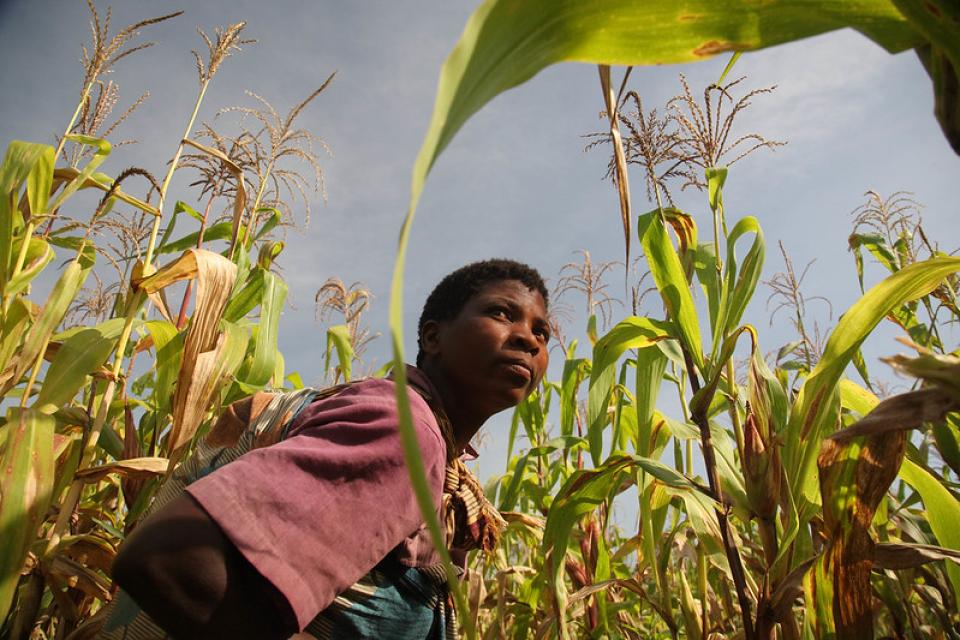
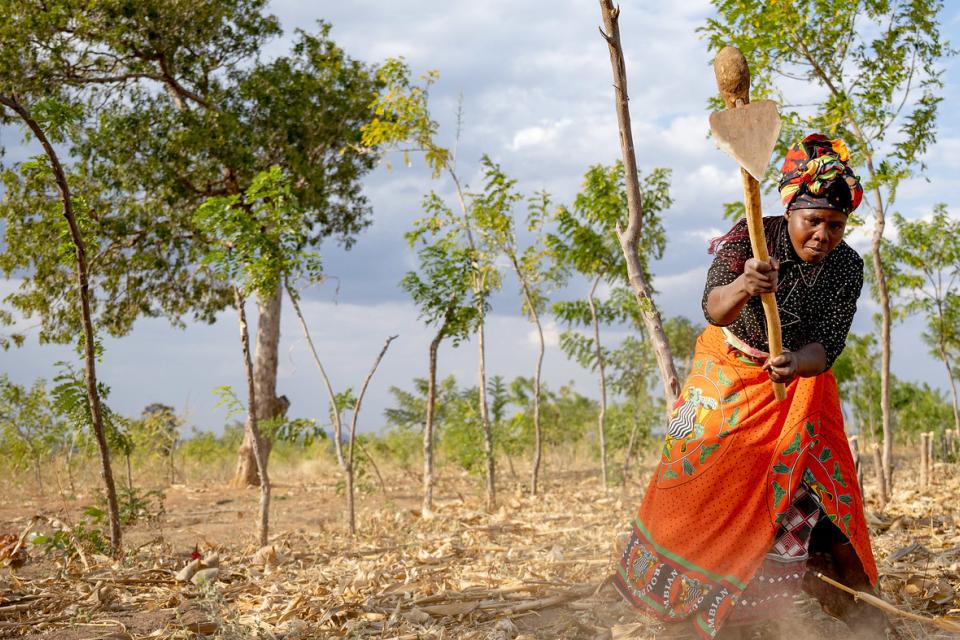
Empowering women towards sustainable and equitable food systems
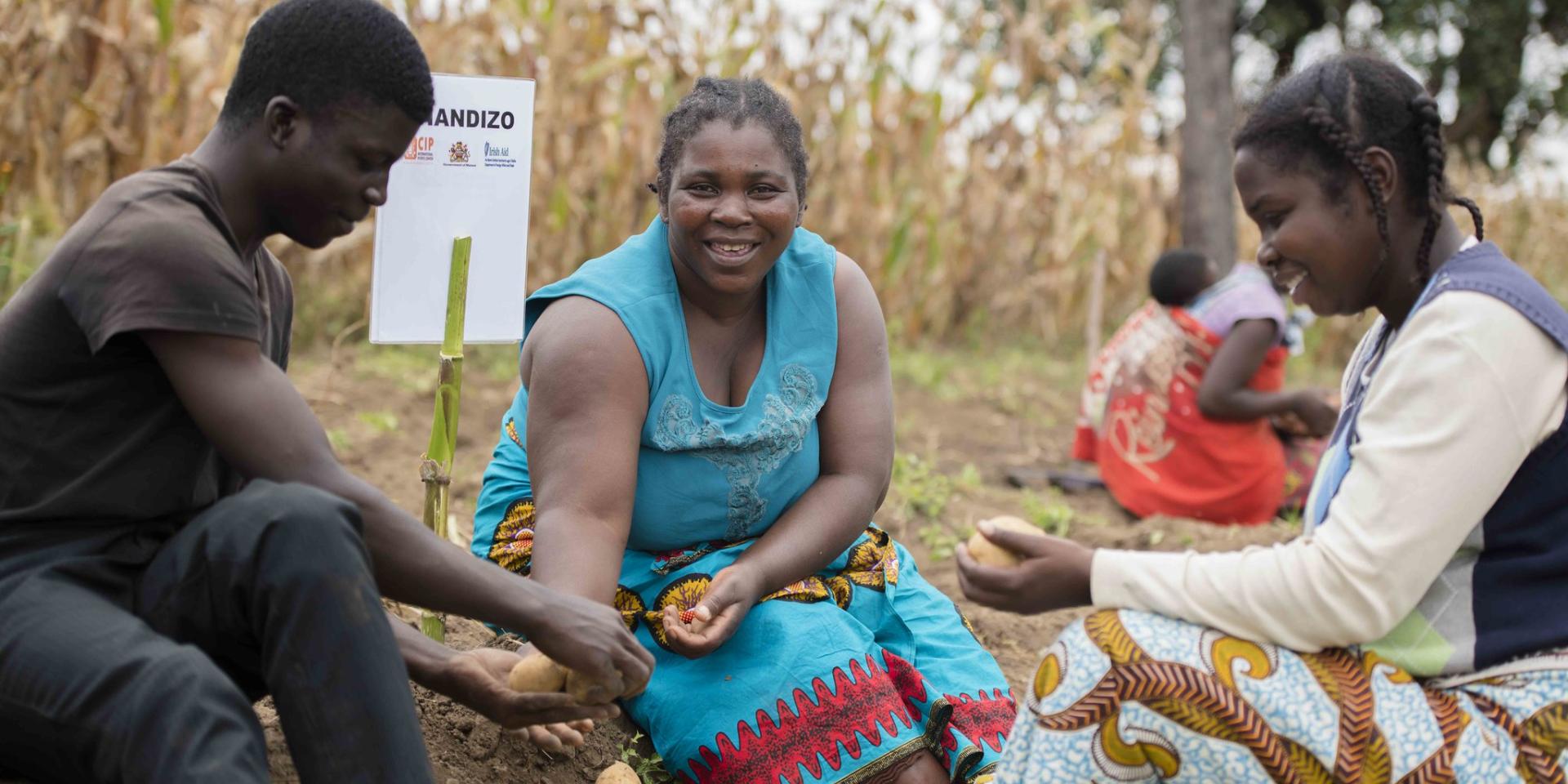 Photo: Hugh Rutherford for CIP
The UN Women’s theme for International Women’s Day 2025 was: “For ALL women and girls: Rights. Equality. Empowerment.”
In response to this call to action, CGIAR’s Gender Equality and Inclusion (GENDER) Accelerator co-hosted an event with African Women in Agricultural Research and Development (AWARD), the International Livestock Research Institute (ILRI), and the Center for International Forestry Research and World Agroforestry (CIFOR-ICRAF) to highlight the persistent challenges and promising pathways for empowering women in agriculture.
Researchers, policymakers, development partners, and students came together on 7 March, not as a celebration of International Women’s Day, but as a rallying point for collective action.
The timeframe for reaching the UN’s Sustainable Development Goals by 2030 is rapidly closing. Women are central to agri-food systems, but the evidence consistently shows that inequalities limit women’s access to land, finance, markets, technology, and decision-making power—hindering not only their progress, but also broader food system transformation.
Without the positive and active involvement of women, the UN’s Sustainable Development Goals cannot be met. According to ILRI Director General Professor Apollinaire Djikeng, empowering women is a moral and development imperative, “This is not about doing women a favor—empowering women is the key to achieving the sustainable development goals we otherwise will not meet.”
The speakers at the co-hosted event came together under the theme of “Empowering women towards sustainable and equitable food systems”.
The power of women
Speakers emphasized that investing in women’s empowerment and equality is not just a moral imperative—it is essential to building resilient, sustainable food systems. When women farmers gain access to improved technologies, such as climate-smart crop varieties or livestock breeds, as well as high-quality inputs, household incomes increase, benefiting entire communities.
CIFOR-ICRAF’s CEO Dr Éliane Ubalijoro talked about the often-overlooked contributions of women in food systems and scientific research, while also highlighting the power of women and girls everywhere to feed and nourish communities, “At a time when the work we do and the value it has for society requires more urgency than ever, it is important that we value the contribution of women in science, in food security and the contributions of women smallholder farmers everywhere.”
Nicoline de Haan, Interim Director of the CGIAR GENDER Equality and Inclusion, emphasized the need to move from evidence to bold actions and solutions. “Be an ally, be bold, and be proud,” she urged, calling for gender-responsive—and ultimately, gender-transformative—approaches to close persistent gaps.
A shared commitment to equal access
Sharing research findings on pest management technologies, Dr Thomas Dubois of the International Centre for Insect Physiology and Ecology (ICIPE), pointed to large gender disparities in access to extension services. “In Uganda, men receive 65% of extension services while women only receive 35%. In Malawi, the gap is even wider—85% for men and just 15% for women.”
These statistics will be further explored in a forthcoming report on the status of Women in African Agrifood Systems highlighting the status of women in sub-Saharan Africa’s agri-food systems and outlining actionable solutions, including multidimensional interventions, access to resources, and tackling structural gender barriers. The report will be authored by AWARD, the Food and Agriculture Organization (FAO), the Natural Resources Institute, the CGIAR GENDER Accelerator, and CARE International. The report is an outcome of a shared commitment by governments, civil society, private sector, and development partners to drive gender equality in food system transformation. This collective effort also means engaging men as allies.
Reflecting on early data from the forthcoming report and her experience with the PABRA Beans Program, Eileen Nchanji from the Alliance of Bioversity International and CIAT urged a shift from analysis to practical application, ensuring that policymakers and practitioners move beyond statistics and ensure that women truly benefit from the initiatives.
Elizabeth Yegon of Kenya’s Ministry of Agriculture reinforced this point calling for participants to look beyond the data and invest in more context-specific research, with women’s land rights being emphasized by Everlyne Naeirsiae, Director at LANDESA, as a foundational issue.
Be on her side
Closing the 2025 International Women’s Day event, Mary Theuri of CIFOR-ICRAF urged all sectors to become allies in advancing women’s progress and to “be on her side”, invoking the words of Tracy Chapman’s 1992 song ‘Woman’s Work’:
Early in the morning she rises
The woman’s work is never done
And it’s not because she doesn’t try
She’s fighting a battle with no one on her side.
Related content