Building resilience through women’s collective action: what the evidence tells us
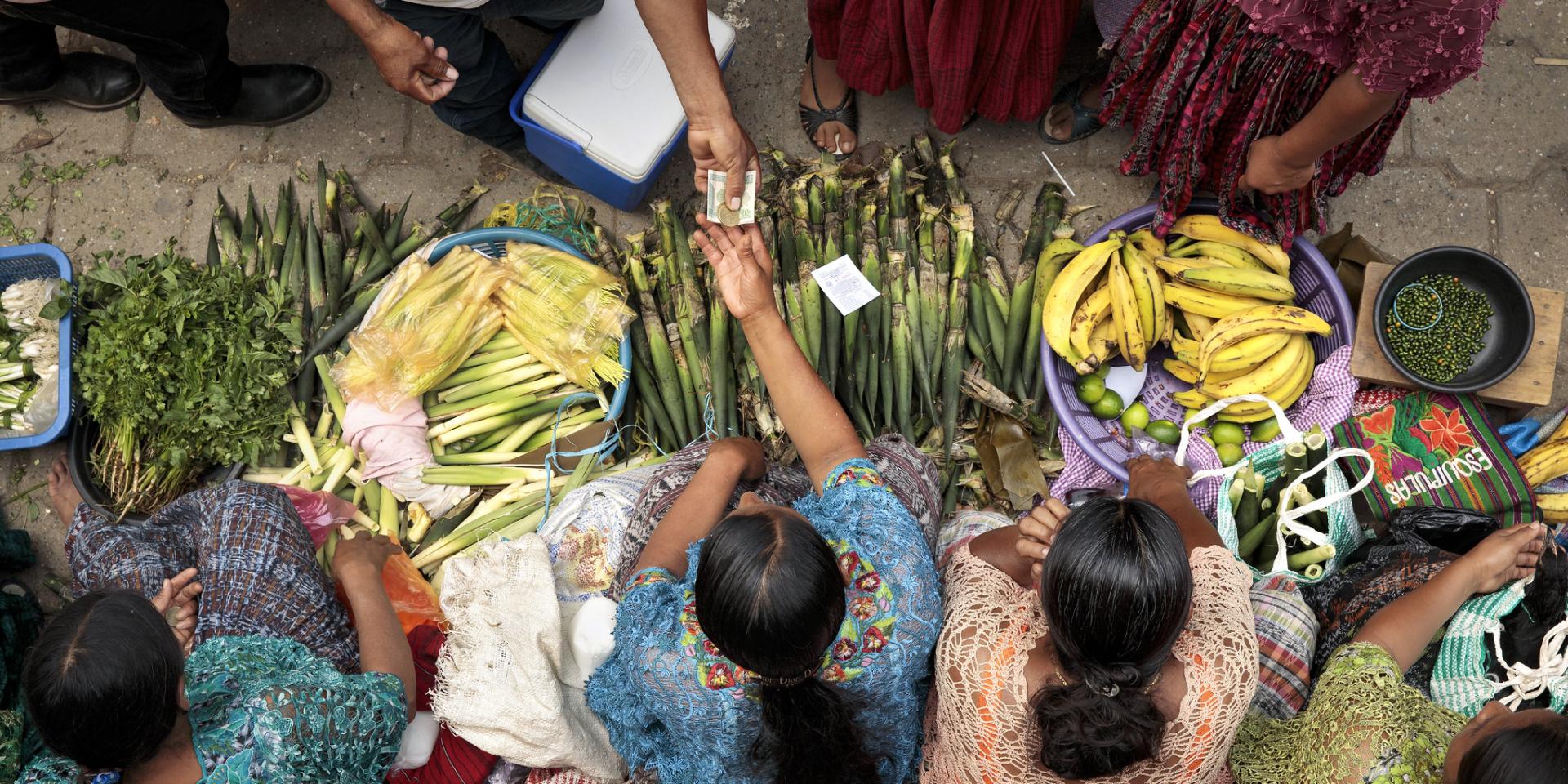 Photo: UN Women/Ryan Brown
- Women’s collective action provides essential financial, social and knowledge-sharing benefits, helping members resilience in responding to shocks and stressors in agri-food systems. However, its effectiveness depends on factors such as the severity of the shocks and stressors, the maturity and size of the collective action group, and the social and political context it operates within.
- Access to finance through collective action groups is a key benefit that can strengthen women’s resilience, but collective action groups face sustainability risks during severe or prolonged crises.
- Evidence gaps, particularly on intersectional impacts and long-term resilience strategies, limit our understanding of how collective action benefits diverse groups of women and the role it plays during prolonged or compounded shocks and stressors.
Women are key contributors to agri-food systems, particularly in the global South, where these systems provide critical livelihoods. However, structural barriers, such as limited access to resources, unequal decision-making power and entrenched gender inequalities can constrain women’s effective participation and heighten their vulnerability to shocks and stressors like climate change and economic instability. Collective action has emerged as a promising approach to help address these challenges.
While the benefits of collective action on women’s empowerment are well documented, its role in building women’s resilience is less understood. Resilience here is defined as women’s ability to anticipate, absorb, mitigate, adapt, recover and transform aftershocks and stressors in a way that reduces chronic vulnerability (adapted from the Intergovernmental Panel on Climate Change and USAID). To fill this knowledge gap, the International Institute for Environment and Development (IIED), with funding support from CGIAR GENDER Impact Platform, conducted a rapid evidence review of 33 studies across Africa, Asia and Latin America to examine the relationship between women’s collective action and resilience in agri-food systems.
From the review, six themes emerged, reflecting the multiple ways collective action can contribute to women’s resilience in the context of specific economic, political, climate and/or environmental shocks or stressors: access to finance for food security and household costs; access to finance to diversify and enhance livelihoods; peer support and resource sharing; knowledge and skills training; empowerment; and the resilience of the collective action.
While existing evidence largely indicates that collective action can strengthen women’s resilience, its impact is highly context-dependent and significantly skewed towards savings groups. There was almost no evidence of collective action undermining women’s resilience—although this is likely due to publication bias.
Financial support can improve women’s resilience; however, sustainability is unclear
Twelve papers illustrated how access to finance through savings groups can improve resilience by enabling women to maintain food security and sustain livelihoods during shocks and stressors. Evidence showed how, during crises, credit provided by savings groups helped households to finance food consumption and reduce dependence on high-interest moneylenders. Group savings acted as emergency funds helping women to avoid asset sales.
Six papers demonstrated financial support enabled women to diversify livelihoods, helping to spread risk and buffer against economic and environmental challenges such as market fluctuations and drought. For example, women in Kenya used savings to invest in agroforestry and livestock rearing, increasing household income and bolstering food security.
One study highlighted how collective action also helped address gender disparities and caste discrimination in disaster relief. After the 2004 Indian Ocean tsunami devastated the east coast of India, women accessed flexible loans through self-help groups, enabling them to rehabilitate livelihoods and start businesses. This support followed the widespread exclusion of women from official relief and recovery programs coordinated by unions and state governments.
Despite these benefits, financial services provided by collective action groups can face sustainability challenges. Severe or prolonged shocks and stressors were shown to deplete group savings and inhibit future lending,[i] and compounded crises like Ebola and COVID-19 threatened long-term sustainability of groups. Flexible repayment terms and zero interest loans, while helpful during crises, can risk stalling investment and preventing or slowing down growth within the group, thereby limiting finance available for future loans. Established groups with clear governance rules were shown to better manage risks to their sustainability.
Strengthened social networks and knowledge sharing can improve preparation and response to crises
Social networks fostered through collective action can enhance women’s resilience by enabling peer support, resource sharing and knowledge exchange. Five studies highlighted positive impacts of improved social cohesion, with members providing emotional and financial aid to one another during crises[ii] like health emergencies or house fires. However, a study in Mali found that while agricultural cooperatives improved social cohesion, they also exacerbated inequalities, as cooperative members often had better access to resources and higher incomes than non-members, leading to social tensions.
Knowledge sharing within groups, including indigenous practices, helped women adapt to climate stressors, adopt improved agricultural practices, and access early warning systems. While groups in Nepal and Bolivia acted as hubs for communicating climate risks. Four studies emphasized the role of collective action groups in delivering external training, equipping members with adaptation skills in conservation agriculture and risk reduction. However, the longevity of these benefits depends on whether knowledge can be consistently integrated into group activities and passed on to future members.
Evidence gaps limit understanding of how collective action contributes to women’s resilience
Only five studies directly assessed the impact of collective action on women’s resilience. Intersectional analysis was absent; most studies did not disaggregate data by as age, ethnicity or socio-economic status, making it difficult to assess whether certain groups face unique barriers or benefit less from collective action.
The evidence is also heavily skewed toward savings groups. While this evidence provides valuable insights, other forms of collective action remain underexplored.
Many studies also lacked detail on the nature and severity of shocks, interactions between multiple stressors or the effects of compounding crises on resilience or group sustainability.
Finally, most studies focused narrowly on short-term coping strategies, such as accessing emergency loans or food resources during crises. While these strategies are critical for immediate survival, they do not address broader systemic changes needed for women’s long-term resilience. Less attention was given to adaptive, anticipatory and transformative capacities, which require systemic changes to reduce vulnerabilities and empower women over time.
Implications for future research and development practice
- Further research should explore intersectional analysis, including how factors like age, ethnicity, and socio-economic status influence access to and benefits from collective action to ensure interventions are inclusive and equitable.
- Research and practitioners should collaborate to examine whether collective action fosters adaptive, anticipatory and transformative resilience, as well as the potential trade-offs between different components of resilience.
- More comprehensive research is needed to understand how collective action groups respond to prolonged or compounding shocks, including their financial and structural sustainability under such pressures.
- Exploration of more diverse forms of collective action could provide a more nuanced understanding of its role in women’s resilience across contexts.
- Spaces for facilitated dialogue among researchers and practitioners would be beneficial to further explore this evidence base to identify best practice and innovations to tackle challenges.
Suggested citation:
Duffy, Janine. 2025. Building resilience through women’s collective action: what the evidence tells us. Nairobi, Kenya: CGIAR GENDER Impact Platform.
[i] Meehan, F. and E. Mengistu. 2016. Drought, Resilience, and Self Help in Ethiopia: A review of TearFund self-help groups following El Niño. USAID.
[ii] CARE and Forcier Consulting. 2016. Improving resilience through village savings and loan associations. CARE International.
Related content