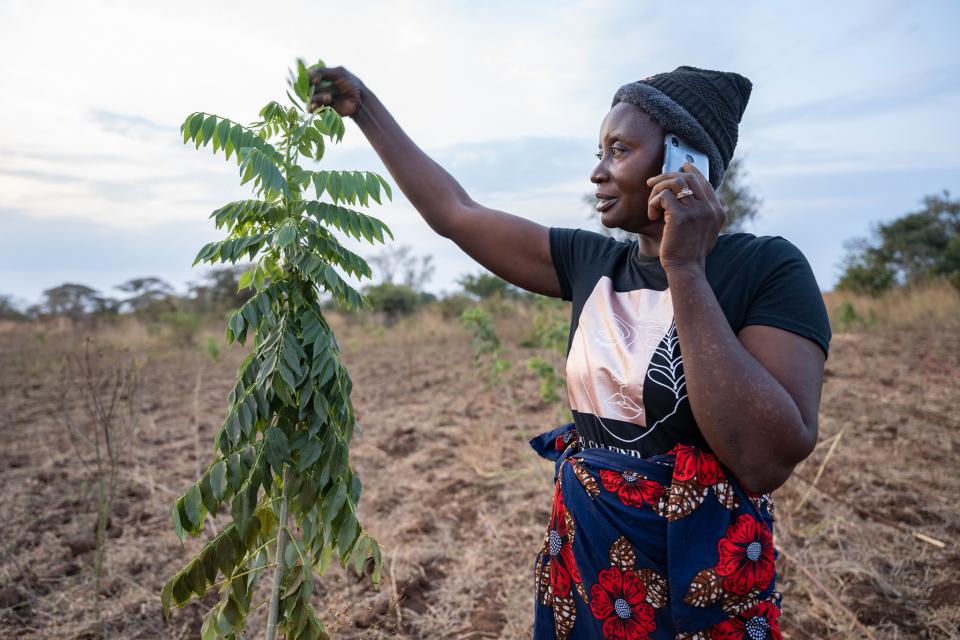
Bridging evidence and ambition for a New Gender Action Plan
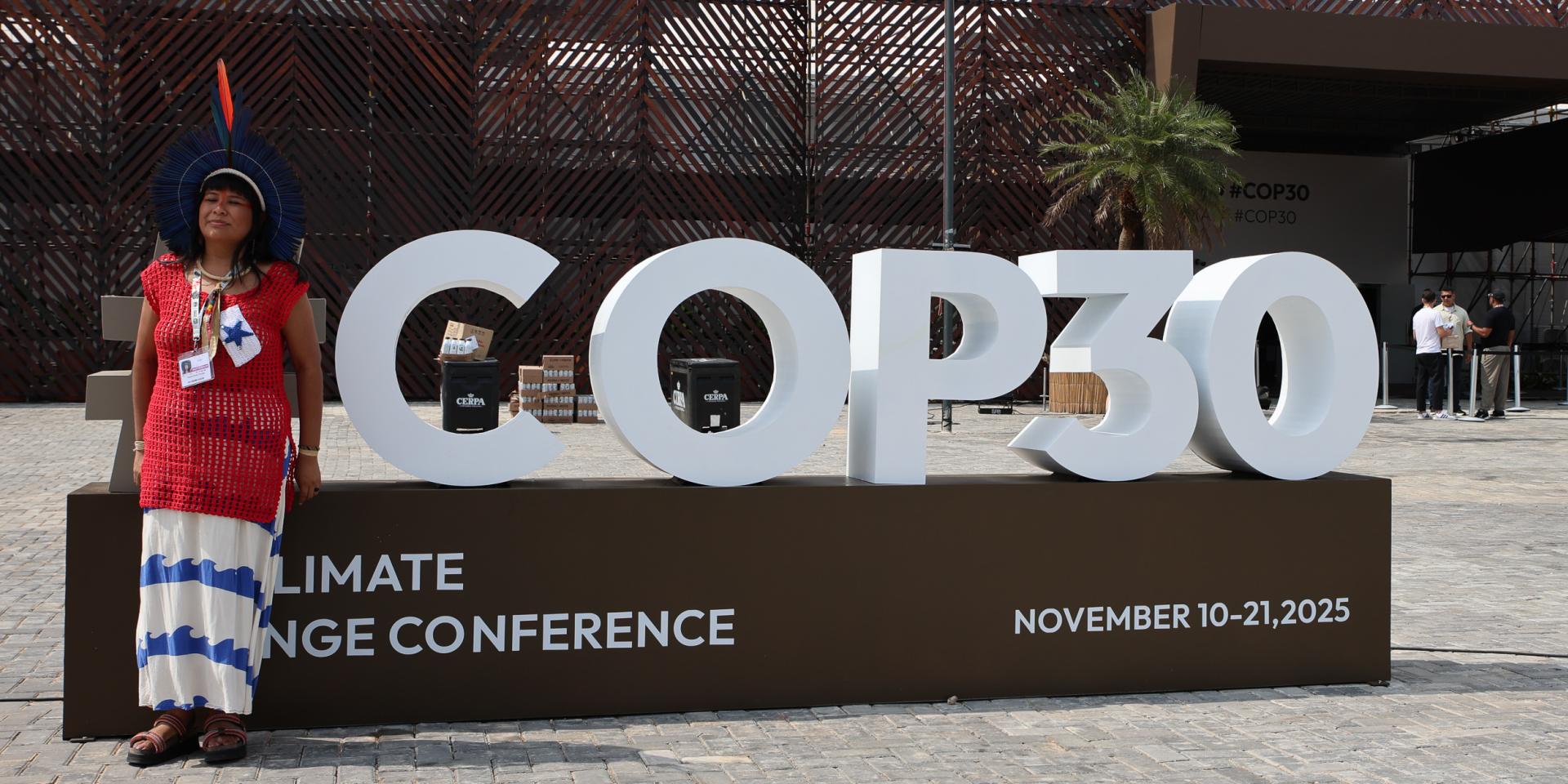 Photo: IISD/ENB | Mike Muzurakis
It is week two of the climate negotiations at COP30, and momentum is building as Parties work to shape the next iteration of the UNFCCC Gender Action Plan (GAP).
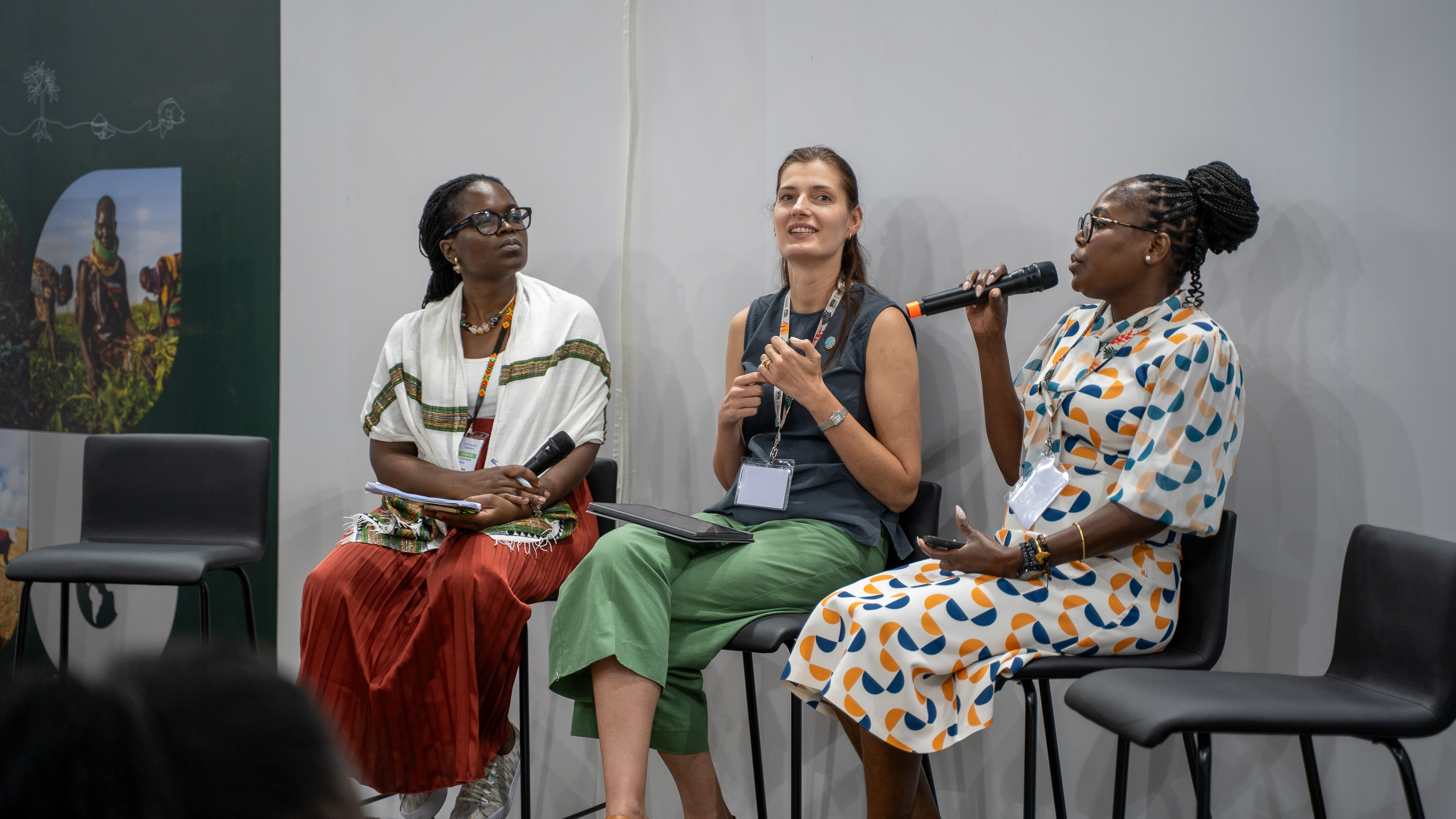
L-R: Vivian Atakos (CGIAR Gender Accelerator), Liva Kaugure (FAO) and Aina Maria Iteta (Gender Negotiator from Namibia) in conversation during the session. Photo: CGIAR
While negotiators inside the Blue Zone refine text and debate ambition, the discussions at the Food and Agriculture Pavilion brought together those shaping policy from multiple angles—including negotiators, researchers, development practitioners, and government actors—to explore a shared question: How do we make the new GAP truly transformative, especially for the women and youth who power our food systems and face the sharpest climate risks? This convergence of perspectives underscored that progress on the GAP cannot happen in isolation; it requires the negotiation table and the evidence, policy, and implementation communities moving in sync.
The session, “Moving Towards a Transformative Gender Action Plan,” opened with a framing from James Thurlow (CGIAR/IFPRI), who underscored why food systems must be central to the GAP’s ambitions. Food systems, he reminded the audience, are much more than agriculture—they include processing, trading, distribution, and services. Across these spaces, women and youth form the backbone. Yet they are disproportionately exposed to climate shocks. Women working as subsistence farmers or informal processors and traders often hold fewer assets and have limited access to finance—conditions that heighten vulnerability and reduce resilience.
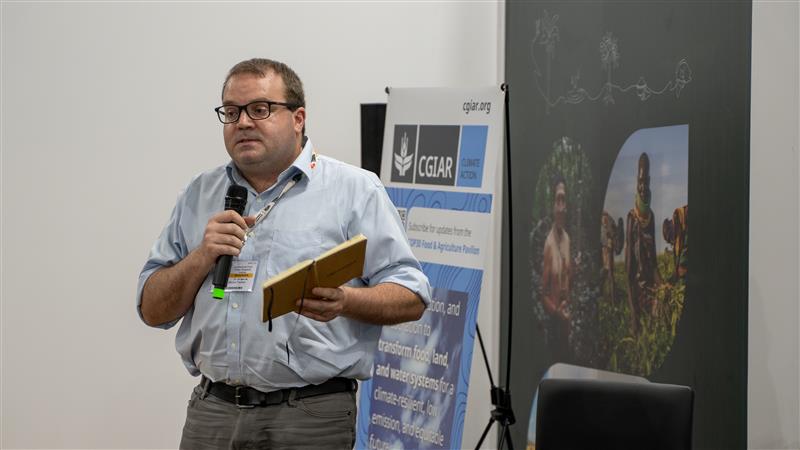
James Thurlow of IFPRI gives the framing remarks. Photo: CGIAR
“If women are particularly vulnerable,” Thurlow argued, “then we need particular actions.” This is the purpose of the Gender Action Plan. He highlighted two priorities essential to strengthening the next iteration: integrating gender throughout climate policy design and implementation, and ensuring coherence across gender, climate, and development agendas—both of which require deliberate investment, better gender data, and diverse partnerships.
National experiences further illuminated how this can be achieved. Abonesh Tesfaye, Gender Focal Point for Accelerating Impacts of CGIAR Climate Research for Africa (AICCRA) Ethiopia, presented the country’s Climate Change Gender Action Plan—an effort supported by the AICCRA program and other actors, which has worked with government experts to embed gender responsiveness across key sectors including agriculture, water, early warning systems, and disaster risk reduction. Ethiopia’s example demonstrated the value of strong institutional frameworks backed by dedicated technical support.
FAO’s Liva Kaugure added evidence from global analyses of Nationally Determined Contributions (NDCs) and National Adaptation Plans (NAPs): while many countries acknowledge gendered vulnerabilities, far fewer translate these insights into concrete and targeted actions. Cases from Uganda and Cambodia showed that capacity building, local leadership, and cross-ministerial coordination are essential to implementation.
Namibia’s UNFCCC national gender focal point and negotiator, Aina Maria Iteta, stressed a critical priority: the next GAP must be well-funded. Without dedicated financing and means of implementation, even ambitious commitments risk stalling.
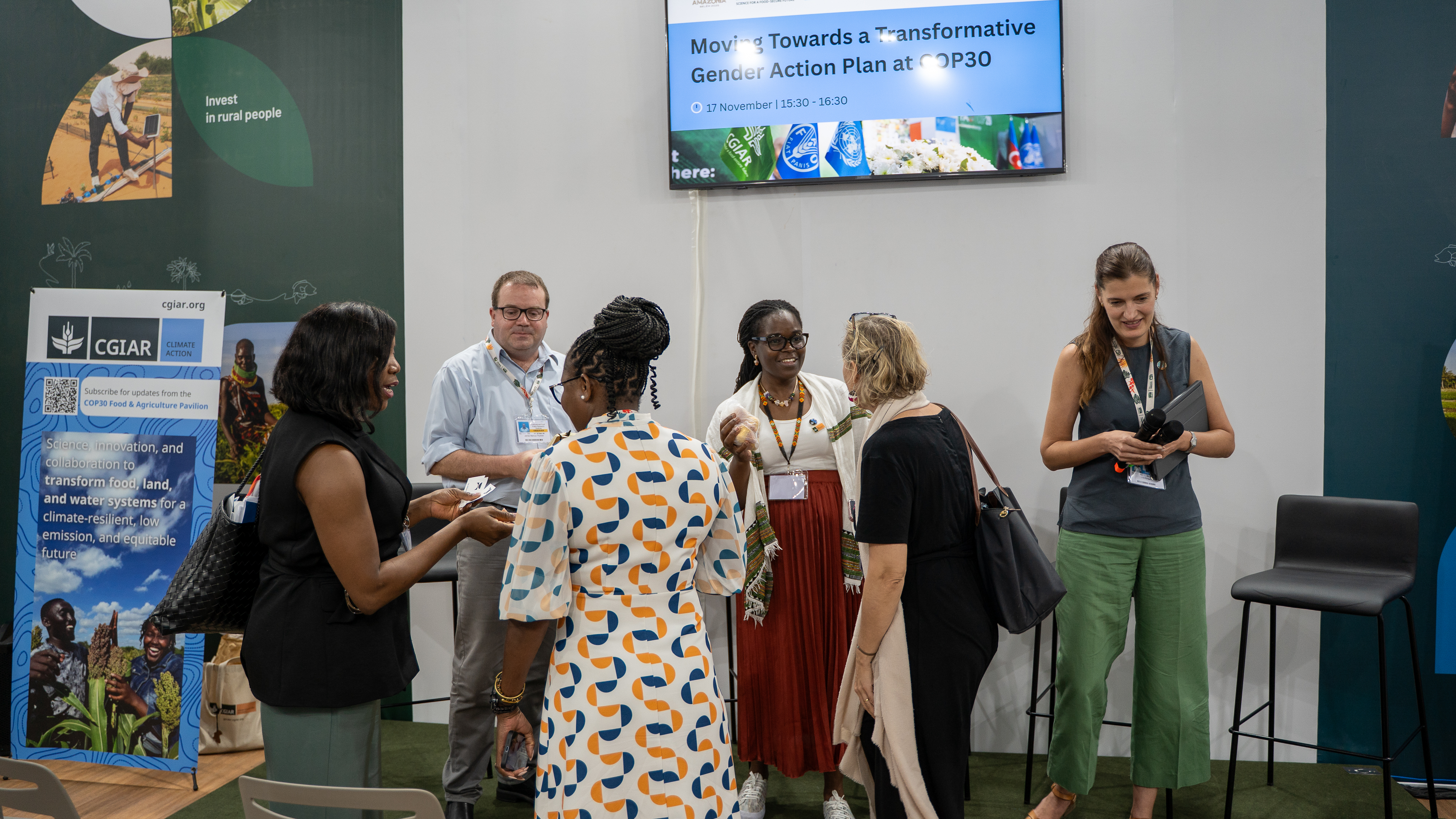
Attendees interact with speakers after the discussion at the Food and Agriculture pavilion. Photo: CGIAR
Across the panel, one message resonated: a truly transformative Gender Action Plan must be intentional, resourced, and grounded in evidence from the food systems where women and youth live and lead. As COP30 negotiations continue, these insights—and the experiences from Ethiopia, Namibia, and beyond—offer a clear pathway for turning global ambition into national action.
The CGIAR Gender Equality and Inclusion Accelerator remains committed to working with parties and other partners to advance evidence-driven, gender-responsive climate policy, as guided by the next iteration of the UNFCCC GAP (hopefully to be adopted at COP30).