Agricultural extension services can support women farmers: 10 recommendations
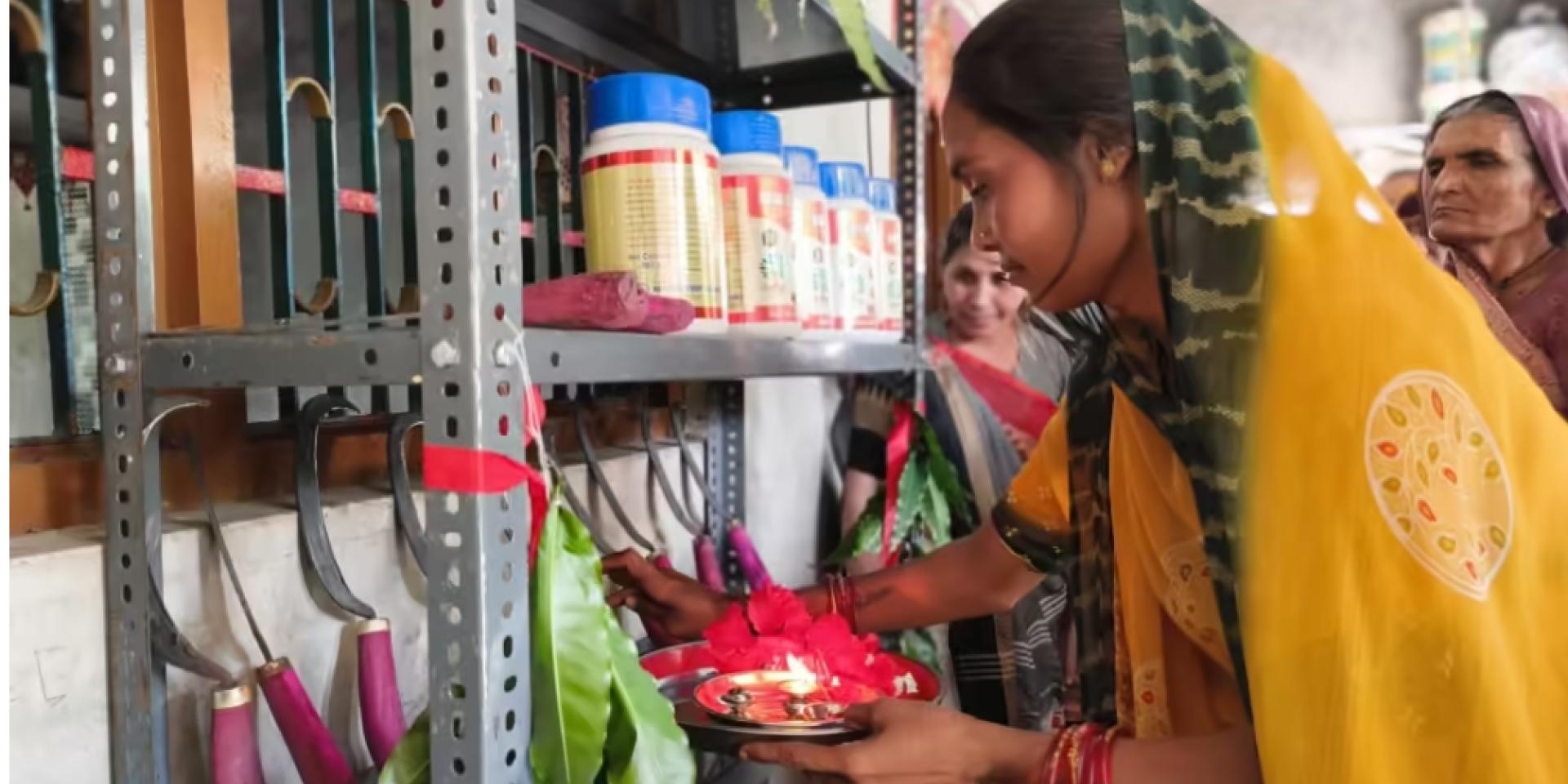 Photo: Sewa Federation
This blog was first published by Sewa Federation.
Women farmers in the Global South, particularly in India, face multiple barriers in accessing essential agricultural inputs, modern technologies, and training opportunities. These barriers are often compounded by the fact that women’s identity as farmers is overlooked. However, agricultural extension services can play a critical role in responding to the needs of women farmers, ensuring they gain access to the resources, knowledge, and support they require.
Our own experience has been that agricultural extension services, which provide farmers with training, support and information to improve agricultural practices, are typically designed with male farmers in mind. We also find that skills and information accessed by men are rarely diffused to other members of the family. This also holds true for technology and digital tools promoted in agriculture. It is due to low phone ownership rates amongst women and the fact that most platforms and resources are designed for users who have close, continuous, individual access and knowledge of technology .
Women-led collectives, such as cooperatives, self-help groups or food producer companies, have emerged as promising platforms to address some of these challenges. Collectives facilitate peer learning and knowledge sharing among women farmers. They improve access to training and extension services, and enhance their bargaining power. Thus, enabling them to access platforms that advocate for more inclusive policies that address their own specific needs. They also help women farmers to overcome barriers of limited access to credit by facilitating group loans or credit schemes, enabling women to invest in their agricultural enterprises.
What lessons do SEWA’s women-led agriculture cooperatives offer to make extension and advisory services more gender-responsive? Ratilaben, a farmer and board member of Megha Mandali—an indigenous women’s agriculture cooperative—and Jayaben Vaghela, a second-generation SEWA member and senior consultant at the SEWA Cooperative Federation, shared ten recommendations. They presented these insights at a workshop organized by IRRI and CGIAR at the National Institute of Agriculture Extension Management (MANAGE) in Hyderabad in November 2025 on women farmers agricultural extension services.